IHCL's 700-Hotel Vision: How The Tata Group Is Building India's Largest Hospitality Empire
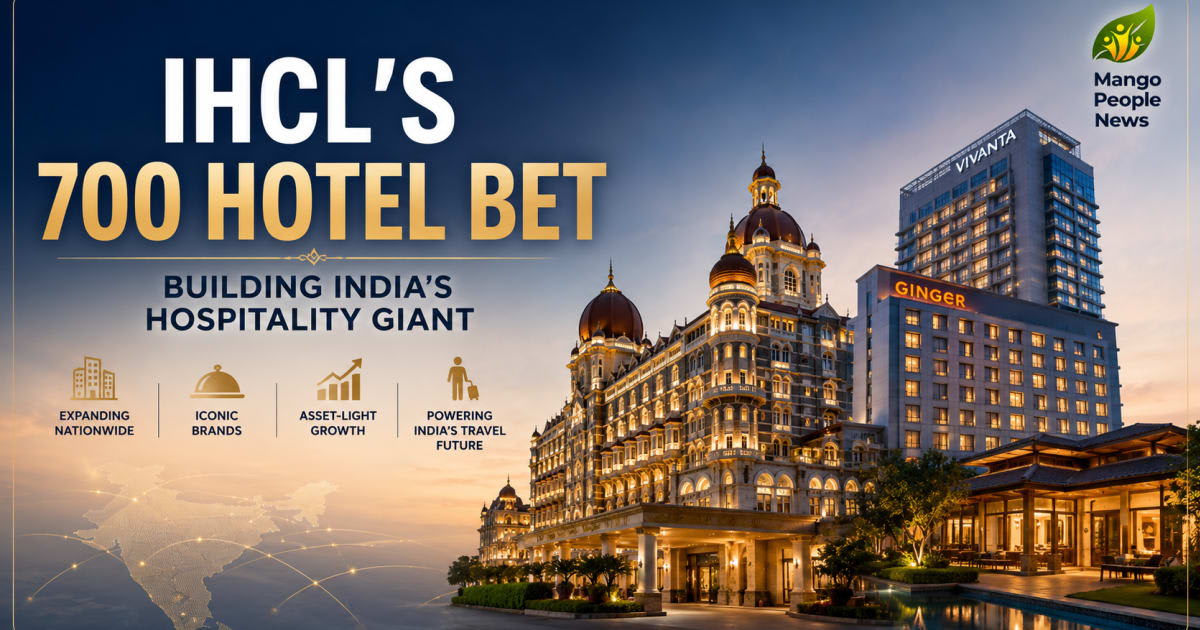
India's hospitality sector is in the middle of one of its strongest growth phases in decades, driven by rising domestic tourism, improving business travel, premium leisure demand and a steady increase in international visitors. At the centre of this transformation is Indian Hotels Company Ltd. (IHCL), the Tata Group's hospitality arm, which has outlined an ambitious plan to build a 700-hotel portfolio by 2030.
The company recently announced the signing of 20 new hotels during the first quarter of FY27, taking its development pipeline to new highs. Simultaneously, Tata Sons Chairman N. Chandrasekaran revealed that IHCL plans to invest ₹6,000–7,500 crore over the next five years, underlining the group's confidence in India's long-term tourism and hospitality story.
These announcements signal something much bigger than an expansion in room inventory. They reflect IHCL's ambition to transform itself from India's oldest hotel company into one of Asia's fastest-growing hospitality platforms.
India's Tourism Boom Is Creating A Multi-Year Opportunity
For several years, India's hotel industry struggled with oversupply, weak occupancy and pressure on room rates. That picture has changed dramatically. Several structural trends are now working in favour of the sector:
Rising disposable incomes.
Growth in domestic leisure travel.
Revival in corporate travel.
Expansion of religious tourism.
Government investment in airports and highways.
Growth in weddings and MICE (Meetings, Incentives, Conferences and Exhibitions).
Increasing foreign tourist arrivals.
Unlike previous cycles that relied heavily on international visitors, today's demand is increasingly driven by domestic travellers exploring destinations across the country.
This shift has created a more resilient growth model for hotel operators.
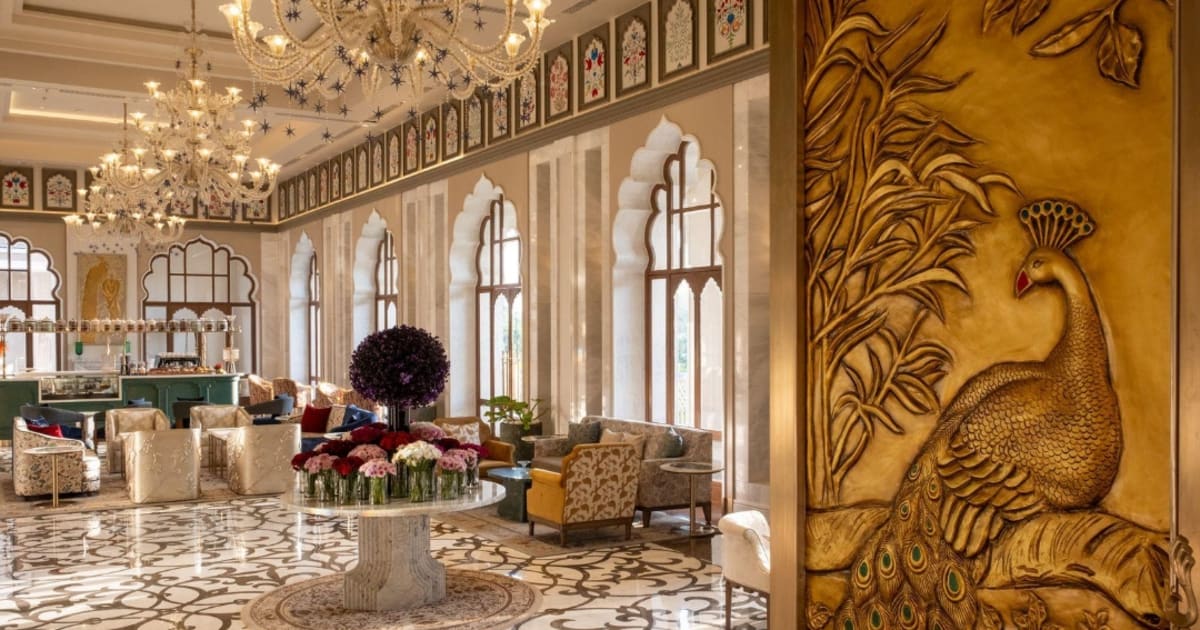
IHCL Is Expanding Across Every Segment Of Hospitality
Unlike many hospitality companies that focus primarily on luxury hotels, IHCL has gradually built a diversified portfolio catering to different customer segments. Its brand architecture includes:
Taj
The group's flagship luxury brand remains one of India's most recognised hospitality names, catering to premium leisure and business travellers.
SeleQtions
This collection focuses on distinctive luxury hotels with strong local character and heritage.
Vivanta
Targeted at upscale business and leisure travellers, Vivanta bridges the gap between luxury and premium hospitality.
Gateway
Positioned in the full-service upper midscale segment, Gateway caters to growing demand from business travellers and families.
Ginger
Once known as a budget hotel chain, Ginger has undergone a significant transformation into a smart mid-market hospitality brand designed for modern travellers.
ama Stays & Trails
This fast-growing business focuses on premium homestays and heritage bungalows, benefiting from increasing demand for experiential travel.
Qmin
IHCL has also expanded beyond hotel rooms through Qmin, its food delivery and gourmet retail platform that extends the company's hospitality experience into consumers' homes.
Tree of Life
The acquisition of Tree of Life has strengthened IHCL's presence in the boutique leisure and experiential hospitality segment, where demand continues to grow.
Together, these brands enable IHCL to participate across luxury, premium, mid-market and lifestyle hospitality rather than depending solely on one category. Increasingly, IHCL is evolving into a broader hospitality platform. Beyond room inventory, the company is expanding into complementary businesses that deepen customer engagement.
The 700-Hotel Target Reflects A Shift In Strategy
Historically, hotel companies expanded slowly because owning hotels required substantial capital investment. IHCL's current strategy is markedly different.
Instead of relying only on owned properties, the company is increasingly pursuing an asset-light model by signing hotels under:
Management contracts.
Franchise agreements.
Partnerships with property owners.
This allows IHCL to expand its network far more rapidly while limiting capital requirements.
The result is a business model that combines steady fee income with selective ownership of strategic assets. For shareholders, this approach has the potential to improve returns on capital while reducing balance-sheet risk.
Why Management Contracts Are Becoming Increasingly Important
Under the traditional model, hotel companies purchased land, constructed hotels and operated them. The asset-light approach changes this equation. Property developers or investors own the hotel. IHCL contributes:
Brand recognition.
Hotel management expertise.
Reservation systems.
Marketing.
Loyalty programmes.
Operational standards.
In return, it earns recurring management fees without deploying large amounts of capital.
Globally, companies such as Marriott, Hilton and Hyatt have successfully used this strategy to scale rapidly. IHCL is now following a similar path while retaining ownership of iconic properties where it sees long-term strategic value.

Why Tata Group Is Increasing Investments Now
Chairman N. Chandrasekaran's announcement of ₹6,000–7,500 crore in planned capital expenditure demonstrates the Tata Group's confidence in the hospitality sector. The investment is expected to support:
Development of owned hotels.
Renovation of existing flagship properties.
Expansion into new cities.
Premium leisure destinations.
Digital technology upgrades.
Brand expansion.
New hospitality experiences.
Unlike cyclical investments aimed at capturing short-term demand, these projects are designed around the belief that India's travel market will continue expanding over the next decade.
Ginger Could Become IHCL's Biggest Growth Engine
While the iconic Taj brand continues to define IHCL's luxury positioning, the company's fastest growth over the next decade may come from a very different segment. India's mid-market hotel industry is expanding rapidly, driven by:
Business travellers.
Tier-II and Tier-III city expansion.
Manufacturing investments.
Corporate travel.
Digital economy professionals.
Domestic tourism.
This is where Ginger Hotels fits perfectly. Over the past few years, IHCL has transformed Ginger from a budget accommodation chain into a modern, design-led mid-scale hotel brand featuring upgraded rooms, contemporary interiors, co-working spaces, smart check-in technology and improved dining options.
The transformation reflects a broader industry trend—Indian travellers increasingly seek affordable hotels without compromising on quality or experience.
As India's business travel ecosystem expands, Ginger is expected to play a crucial role in helping IHCL achieve its 700-hotel ambition.
Luxury Travel Remains Strong Despite Global Uncertainty
Although economic slowdowns often affect discretionary spending, India's luxury hospitality market has remained remarkably resilient. Several structural trends continue to support premium demand:
Rising Affluent Population
India continues to add high-net-worth individuals and affluent households every year, creating sustained demand for luxury hospitality.
Destination Weddings
Luxury hotels have become preferred venues for weddings and celebrations, generating high-margin revenue beyond room bookings.
Experiential Travel
Travellers increasingly value curated experiences over traditional sightseeing, benefiting brands such as Taj, SeleQtions and ama Stays & Trails.
Premium Business Travel
Corporate executives continue to prefer premium hotels that offer integrated meeting facilities, wellness amenities and world-class service.
For IHCL, this means the luxury segment remains an important profit contributor even as it aggressively expands into mid-market hospitality.
International Expansion Is Becoming The Next Frontier
Although India remains IHCL's largest market, the company is steadily strengthening its international footprint. Its hotels already operate across Middle East, Europe, United States, Africa, South Asia and Indian Ocean destinations. Future expansion is likely to focus on regions with:
Large Indian diaspora.
Strong business travel.
Luxury tourism.
Gateway financial centres.
High-end leisure destinations.
Rather than competing purely on scale with global hotel chains such as Marriott or Hilton, IHCL is positioning the Taj brand as a symbol of Indian luxury and hospitality. As India's global economic influence grows, premium Indian hospitality brands could gain wider international recognition.
Technology Is Becoming A Competitive Advantage
Hospitality is no longer driven solely by location and luxury. Technology increasingly influences customer experience. IHCL has invested in:
Digital booking platforms.
Contactless check-in.
AI-assisted guest services.
Revenue management systems.
Personalised marketing.
Data-driven pricing.
Its integration with the Tata Neu ecosystem further strengthens digital customer acquisition and loyalty. Meanwhile, Taj InnerCircle, now integrated into Tata Neu, provides members with rewards across multiple Tata businesses, encouraging repeat engagement and cross-brand spending.
How IHCL Compares With Its Listed Peers
EIH (Oberoi Hotels)
Oberoi continues to dominate India's ultra-luxury hospitality segment with a relatively smaller but highly premium portfolio.
Lemon Tree Hotels
Lemon Tree has built a strong presence in the mid-market and upper mid-scale segments through an asset-light expansion strategy.
ITC Hotels
ITC combines luxury hospitality with a strong sustainability focus and benefits from its diversified parent ecosystem.
Chalet Hotels
Unlike hotel operators focused on management contracts, Chalet owns premium hotel assets located in major commercial hubs, generating revenue from both hospitality and real estate.
Juniper Hotels
Juniper has expanded rapidly through its partnership with Hyatt and remains focused on premium urban hospitality.
IHCL
What differentiates IHCL is the breadth of its portfolio. Few competitors operate simultaneously across Luxury, Premium, Mid-market, Boutique stays, Homestays, Food delivery, Lifestyle hospitality, Asset ownership and Asset-light management.
This diversified platform allows IHCL to participate across multiple demand segments while reducing dependence on any single category.
The Bottom Line
IHCL's latest announcements are about far more than signing 20 hotels in a single quarter. They represent the next phase of a long-term transformation that is reshaping the company into one of Asia's most diversified hospitality businesses.
Its ambition to reach 700 hotels by 2030, backed by a ₹6,000–7,500 crore investment plan, reflects confidence not only in its own brands but also in the structural growth of India's travel and tourism sector.
By balancing luxury with mid-market expansion, combining owned hotels with an asset-light model, and integrating hospitality into the wider Tata ecosystem, IHCL is creating multiple engines of growth.
If domestic tourism, premium travel and business demand continue expanding as expected, the company could emerge as one of the biggest beneficiaries of India's hospitality boom over the coming decade.
For investors, the story is no longer simply about hotel rooms—it's about building an integrated hospitality platform that spans travel, food, experiences and digital engagement.

Nikunjj Jhawar is a Chartered Accountant (CA) and Chartered Financial Analyst (CFA) with nearly two decades of experience in the financial services industry. Having worked with global institutions such as HSBC and Credit Suisse in investment-related roles, he brings deep expertise in finance and markets. He is the Founder of mangopeoplenews.com, where he focuses on making complex topics in finance, markets and business accessible and relevant to everyday readers.