The Empire at a Crossroads: Inside the Battle Fracturing Tata Group at Its Very Top

For 158 years, the Tata Group has been India's most trusted institution — a conglomerate that somehow managed to be both a ruthless commercial machine and a moral compass for Indian capitalism. It built steel plants and airlines, sold salt and software, and ran its empire through a structure so distinctive that no business school has quite figured out how to categorise it. Charitable trusts at the top, holding company in the middle, publicly listed operating companies below — all tied together by an unspoken compact of consensus and shared purpose. That compact is fracturing. Loudly, publicly, and at the worst possible moment.
The $180 billion Tata Group is navigating a convergence of crises that would test any institution: a leadership succession that remains unresolved, a regulatory confrontation with India's central bank that has no clean exit, internal governance battles that have spilled into courts and charity commission filings, and a set of new business bets that are bleeding cash at a pace that has alarmed even sympathetic board members. For the first time in a generation, the question being asked in Mumbai's financial corridors is not how Tata grows next, but whether it can hold together at all.
THE FAULT LINES AT TATA TRUSTS
To understand the crisis, you have to start at the top — the Tata Trusts, the charitable foundations that collectively hold approximately 66% of Tata Sons, the unlisted holding company that controls the entire group.
The Sir Dorabji Tata Trust and Sir Ratan Tata Trust together hold roughly 51.5% of Tata Sons, with the remainder of the Trust position held by smaller affiliated charitable entities. For decades, this structure worked because the Trusts functioned as a single, coherent shareholder with a shared vision. That unity is now gone.
After Ratan Tata's death in October 2024, Noel Tata was appointed Chairman of Tata Trusts. Unlike his predecessor, Noel has faced closer scrutiny from fellow trustees and has not yet consolidated the same authority that Ratan Tata held over nearly three decades. The fault lines became visible almost immediately.
In October 2025, Noel Tata and other trustees voted out Mehli Mistry as trustee of both the Sir Ratan Tata Trust and Sir Dorabji Tata Trust — the first time in either institution's history that a sitting trustee had been removed. Mistry did not go quietly. He filed an affidavit before Maharashtra's Charity Commissioner alleging serious irregularities in the administration of the Trusts, questioning the legality of the board of trustees, and seeking the appointment of an independent administrator. He also challenged the appointment of Venu Srinivasan and Vijay Singh as vice-chairmen of the Trust, arguing that as non-Parsis they are ineligible under the trust deed and the provisions of the Maharashtra Public Trusts Act.
Then came the rupture that made everything else look like a prelude.
In July 2025, Tata Trusts under Noel Tata had passed a formal resolution to keep Tata Sons private, instructing Chairman N. Chandrasekaran to examine all options for remaining unlisted. By April 2026, that resolution had been directly contradicted from within — by the Trusts' own vice-chairmen. Venu Srinivasan publicly called listing "inevitable" if the RBI maintained its upper-layer classification. Vijay Singh expressed the same view. It was the first time sitting vice-chairmen had openly broken with the official Trust position on a matter of this magnitude.
The internal consensus that made Tata Trusts one of the most powerful and stable corporate governance structures in Asian business history is, for now, broken.
THE IPO QUESTION: WHY IT REFUSES TO GO AWAY
At the centre of every argument inside Tata right now is one question: should Tata Sons go public?
The answer matters because Tata Sons is not merely a financial holding company. It is the architectural keystone of the entire group. Its governing articles include provisions that give the Trusts veto power over consequential decisions across the group — provisions that a public listing would significantly dilute, as listed companies are subject to SEBI regulations and minority shareholder rights that override internal governance arrangements. For Noel Tata, that dilution of control is non-negotiable.
But the regulatory environment has shifted decisively against him. Under RBI rules taking effect from July 1, Tata Sons will be designated a systemically important shadow bank — a classification that ultimately requires a public listing. This is not the first time the RBI has pushed in this direction. In 2022, it classified Tata Sons as an upper-layer non-banking financial company with a three-year deadline to list. The group managed to sidestep that requirement by restructuring its debt and petitioning for a reclassification as a non-systemic entity.
That escape route has now been closed. A new RBI draft framework released on April 10, 2026 proposes classifying entities in the upper layer on the basis of asset size alone — meaning Tata Sons would remain in the upper layer regardless of the outcome of its deregistration application. The RBI has also informally conveyed to Tata's trustees that it is unwilling to make an exception for the conglomerate, noting that any carve-out would invite similar demands from other large entities and set a damaging regulatory precedent. The regulator has already sought legal opinion and forwarded its view to the central government for final review.
The pro-listing camp within the Trust has a compelling financial case. Venu Srinivasan has argued publicly that listing would enable Tata to raise large capital for capital-intensive new-age sectors — aviation, defence, semiconductors, batteries, and electronics — where internal resource generation is no longer sufficient. Given the scale of losses that have accumulated in the group's newer businesses, that argument carries particular weight right now.
THE LOSSES: AIR INDIA, TATA DIGITAL, AND A ₹29,000 CRORE PROBLEM
The governance battles at the top of Tata are inseparable from a financial reality that has grown increasingly uncomfortable: the group's most ambitious new bets are not paying off on the timelines that were promised.
Tata Sons' new ventures are facing combined projected losses of up to ₹29,000 crore in FY26 — a figure that dwarfs an earlier estimate of ₹5,700 crore and represents one of the most significant single-year financial disappointments in the group's recent history.
Air India is the biggest contributor to that figure. Tata acquired the national carrier from the government in 2022 amid considerable fanfare, positioning the turnaround as both a commercial opportunity and a patriotic act. The recovery has proved far harder than anticipated. The integration has been hampered by the June 2025 crash of a Boeing 787 Dreamliner in Ahmedabad, and ongoing hostilities in the Persian Gulf have further complicated the airline's recovery trajectory.
Tata Digital, the group's consumer internet ambition spanning Tata Neu, BigBasket, and 1mg, is a separate source of concern, while Tata Electronics is projected to post a ₹3,000 crore loss and Tejas Networks is expected to swing from a ₹500 crore profit in FY25 to a ₹1,000 crore loss in FY26.
The accumulation of these numbers created the context for perhaps the most telling moment of the current crisis. At a Tata Sons board meeting on February 24, 2026, Noel Tata declined to support the reappointment of Chairman N. Chandrasekaran for a third term — making him the only board member to withhold support. The decision was deferred, leaving Chandrasekaran's position formally unresolved ahead of a critical June board meeting. Sources indicate that Noel Tata outlined four conditions he believes must be met before any extension is finalised: Tata Sons must remain unlisted, the holding company must stay debt-free, and the chairman must present a credible roadmap for the loss-making businesses.
Chandrasekaran is the first Tata Sons chairman in the group's history to come from outside the Tata and Mistry clans. He has placed some high-stakes bets — including a multi-billion dollar semiconductor foray in Gujarat and a debt-fuelled acquisition of an Italian commercial vehicles firm — that are reaching capital-intensive inflection points precisely as questions about his continuation cloud the group's leadership.
THE SHAPOORJI PALLONJI WILDCARD
Running through every dimension of this story is the unresolved position of the Shapoorji Pallonji Group — the powerful infrastructure conglomerate whose stake in Tata Sons has been a source of friction between India's two most prominent Parsi dynasties for the better part of a decade.
The SP Group holds an 18.37% stake in Tata Sons worth approximately ₹3 lakh crore based on the cumulative market values of Tata Sons' listed subsidiaries. It is the group's most valuable asset — and it is completely illiquid. When Tata Sons converted to a private limited company in 2017, strict transfer restrictions were placed on its shares, trapping the SP Group's wealth in an asset it cannot sell.
The SP Group carries an estimated ₹55,000–₹60,000 crore in total debt, much of it collateralised against this illiquid stake. The financial pressure on the group to achieve some form of liquidity event is therefore acute and growing. SP Group Chairman Shapoor Mistry has described Tata Sons' listing as "not merely regulatory compliance but a necessary evolution," arguing it would unlock value for all stakeholders, strengthen board accountability, and create a more defined dividend stream for the Trusts' own philanthropic obligations.
The SP Group's 18.4% stake, accumulated by the Mistry family between 1965 and 1995, has been the primary source of friction between these two dynasties. The relationship carries layers of personal complexity — Noel Tata is married into the Mistry family, even as the institutional interests of the two groups have diverged sharply. The Supreme Court settled the question of legal control in 2021, finding in favour of the Tatas after the dramatic 2016 ouster of Cyrus Mistry as group chairman. But the dispute over this illiquid stake has survived both Ratan Tata and Cyrus Mistry.
WHAT HAPPENS NEXT
Tata Trusts scheduled a high-stakes meeting for May 8, 2026, with the stated agenda of reviewing the nominees representing the Trusts on the Tata Sons board — a move widely interpreted as Noel Tata tightening his grip on the governance architecture ahead of the critical June board meeting where Chandrasekaran's future will be decided.
The outcomes of these meetings will determine several things simultaneously: whether Chandrasekaran gets his third term and on what conditions, whether the Trust's position on listing shifts formally or remains nominally opposed to what the RBI appears determined to impose, and whether the governance fractures at the Trust level deepen or begin to heal.
If boardroom squabbles escalate to the courtroom again, or the government becomes involved, Tata Sons' control over its operating subsidiaries — collectively worth more than $300 billion — could face challenges that no amount of restructuring can easily resolve.
The irony at the heart of all of this is that Tata's identity is built on trust — the word appears in the very name of the foundations that own it. A public listing, the thing Noel Tata most wants to avoid, would formalise that trust through the disclosure requirements of a listed company: quarterly financials, board composition transparency, and public accountability for strategic decisions. Beyond the financial stakes, a prolonged fracture risks transforming a symbol of national pride — from salt and steel to chips and code, from tea and trucks to iPhones and aviation — into a cautionary tale of dynastic fragility.
India has watched Tata navigate difficult moments before. The Cyrus Mistry episode was ugly, but it was resolved. What makes this moment qualitatively different is that the pressures are coming simultaneously from every direction — regulators, board members, minority shareholders, financial markets, and an operating portfolio that needs both decisive leadership and patient capital at exactly the same time. Whether Tata can manage all of those tensions at once, while staying true to the institutional ethos that makes it unlike any other conglomerate in the world, is the defining question of the years ahead.
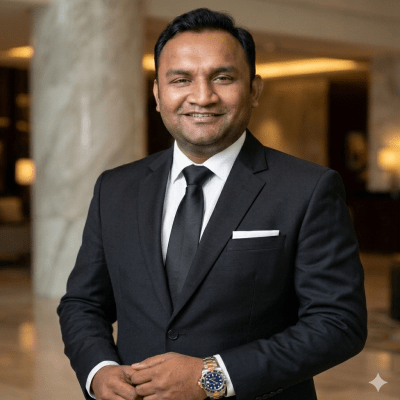
Nikunjj Jhawar is a Chartered Accountant (CA) and Chartered Financial Analyst (CFA) with nearly two decades of experience in the financial services industry. Having worked with global institutions such as HSBC and Credit Suisse in investment-related roles, he brings deep expertise in finance and markets. He is the Founder of mangopeoplenews.com, where he focuses on making complex topics in finance, markets and business accessible and relevant to everyday readers.