From 1.9 GW to 15 GW: India's $100 Billion Data Centre Decade Is Officially Underway — and Power Is the Only Thing That Can Slow It Down
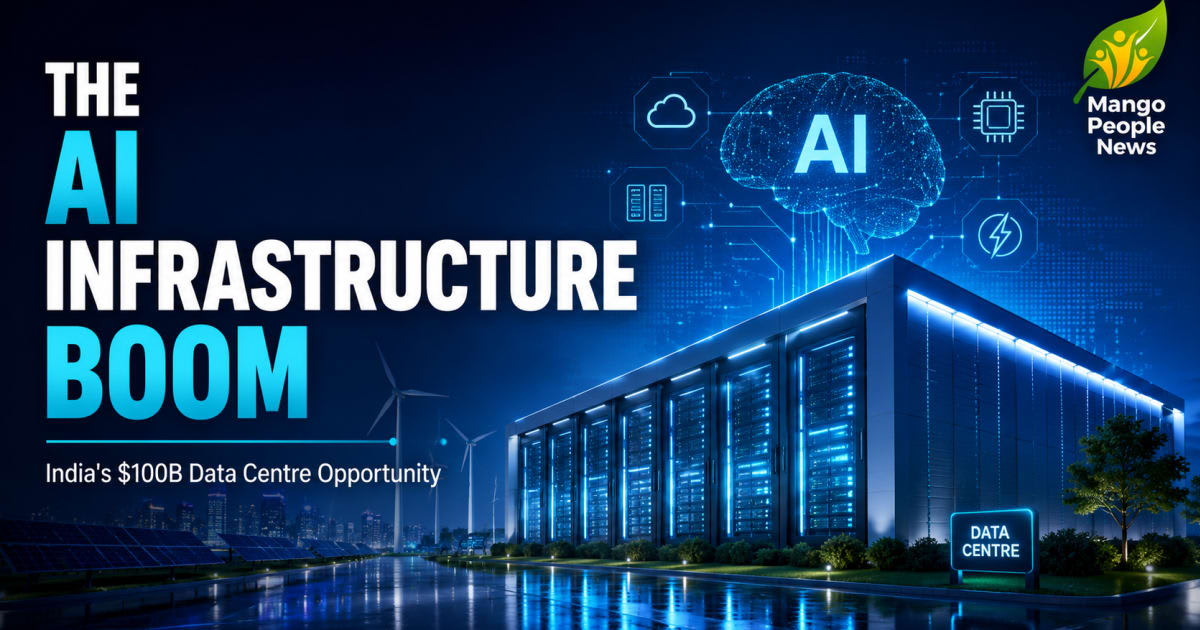
A Market at Its Most Consequential Inflection Point
India consumes roughly 20% of the world's data. It hosts less than 5% of the world's data centres. That gap — between demand and infrastructure — is the single most important number in India's technology investment story right now.
India's installed data centre capacity has grown from approximately 1.5 GW in 2025, with a development pipeline expected to add 4.5 GW over the next five years, reflecting a compound annual growth rate of 22.79%.
India is set to attract $100 billion in investment in new data centre capacity by 2030, part of a larger $800 billion investment line-up across the Asia-Pacific region, according to Deloitte. A separate KPMG report published in July 2026 places committed investments from hyperscalers and global operators at over $120 billion — with the divergence reflecting different methodologies rather than any disagreement about the direction of travel.
The direction is unambiguous: India is about to build more data centre capacity in the next six years than it has built in its entire history. The question is not whether this will happen. It is whether the power grid, the water supply, the regulatory environment, and the talent base can support it at the required pace.
The Capacity Numbers — What the Projections Actually Say
The scale of what is being planned is genuinely difficult to comprehend in the abstract. Let concrete numbers tell the story.
India's installed data centre capacity reached approximately 1.9 GW in FY26, with a development pipeline expected to add 4.5 GW over the next five years. Capacity is projected to climb from 5,450 MW in 2026 to 15,210 MW by 2031, reflecting a 22.79% compound annual growth rate over the forecast period.
To understand what 15 GW of data centre capacity represents: India's entire residential electricity consumption for a major metro like Mumbai runs at approximately 3–4 GW on a peak day. A 15 GW data centre ecosystem would consume roughly three to four Mumbais' worth of continuous, uninterrupted power — not during peak hours, but 24 hours a day, 365 days a year, with zero tolerance for outages.
AI-led demand could require an additional 40–45 TWh of power, and electricity consumption from data centres could rise to 2.5–3% of national demand by 2030.
Why AI Is the Accelerant Nobody Fully Priced In
Until 2023, India's data centre growth was driven primarily by cloud adoption — enterprises moving their IT workloads from on-premise servers to AWS, Azure, and Google Cloud. That is a steady, predictable growth curve.
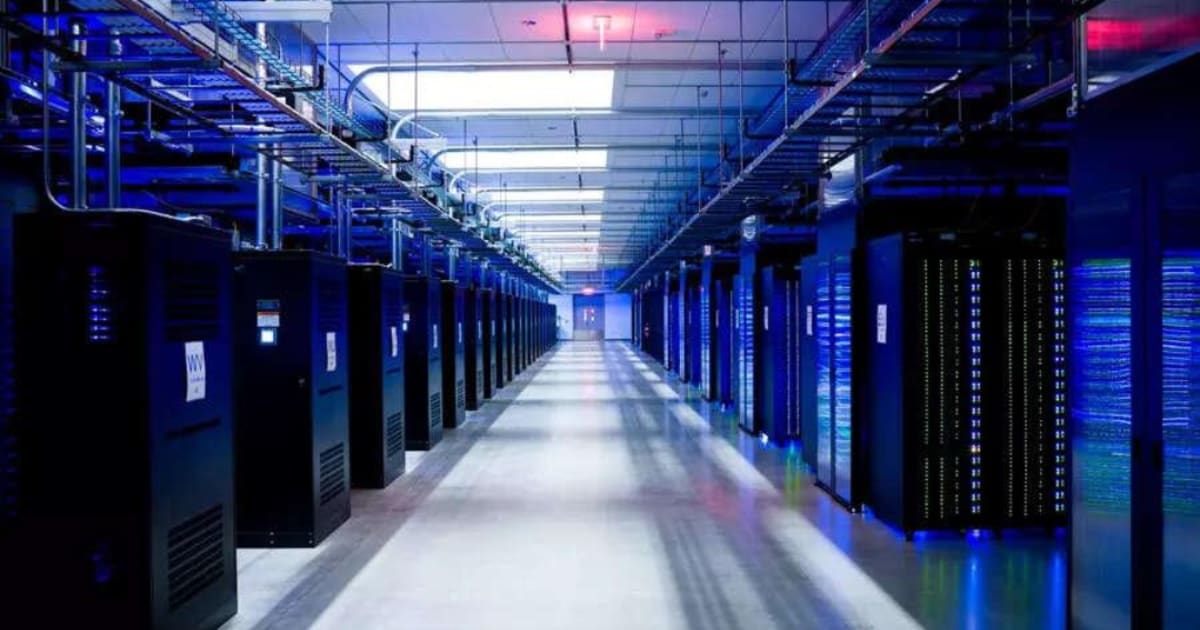
What changed with the arrival of large language models and generative AI is not just the growth rate but the power intensity of each unit of capacity. A GPU cluster running AI training workloads consumes five to ten times more power per square foot than a conventional server room hosting enterprise applications. Every AI data centre that gets built requires five to ten times the power infrastructure that its physical footprint would have implied two years ago.
The drivers of data centre growth in India include sovereign data requirements, rising AI use cases, expanded digital connectivity, enterprise cloud growth, and regulatory adoption such as the Digital Personal Data Protection Act.
Sovereign data-localization mandates under the Digital Personal Data Protection Act 2023, hyperscale commitments topping $30 billion from Microsoft and Google, and the arrival of 220 Tbps of new subsea capacity in Chennai and Mumbai are all accelerating capacity build-out.
The DPDP Act deserves particular attention. The requirement that Indian citizens' personal data be stored and processed within India is not merely a compliance checkbox — it is a structural demand driver that mandates building capacity domestically regardless of whether the commercial economics alone would justify it. Every Indian bank, every healthcare provider, every government digital service now needs Indian-domiciled storage for citizen data. That is demand that cannot be offshored.
The Power Problem — India's Most Critical Infrastructure Bottleneck
Every expert quoted in Deloitte's report and the KPMG July 2026 paper returns to the same constraint. The demand for data centre capacity is clear and well-funded. The power to run that capacity is the variable that could derail the entire trajectory.
Deloitte's Will Symons stated that for 8–10 GW of data centre capacity to be built in India in the next four years, India will have to ensure there is sufficient power supply. Data centres alone will contribute more than 10% of the peak power demand in each of the major states through 2030.
If data centres are powered through renewable energy, which is infirm by nature, the country would need significant power system reliability planning to avoid grid instability.
This is the fundamental tension. Hyperscalers want clean, renewable power — their global sustainability commitments and their long-term power procurement economics both point toward renewable PPAs. But solar and wind are inherently intermittent: they generate power only when the sun shines or the wind blows. A data centre that needs 99.9999% uptime cannot simply stop processing when clouds appear over a solar farm.
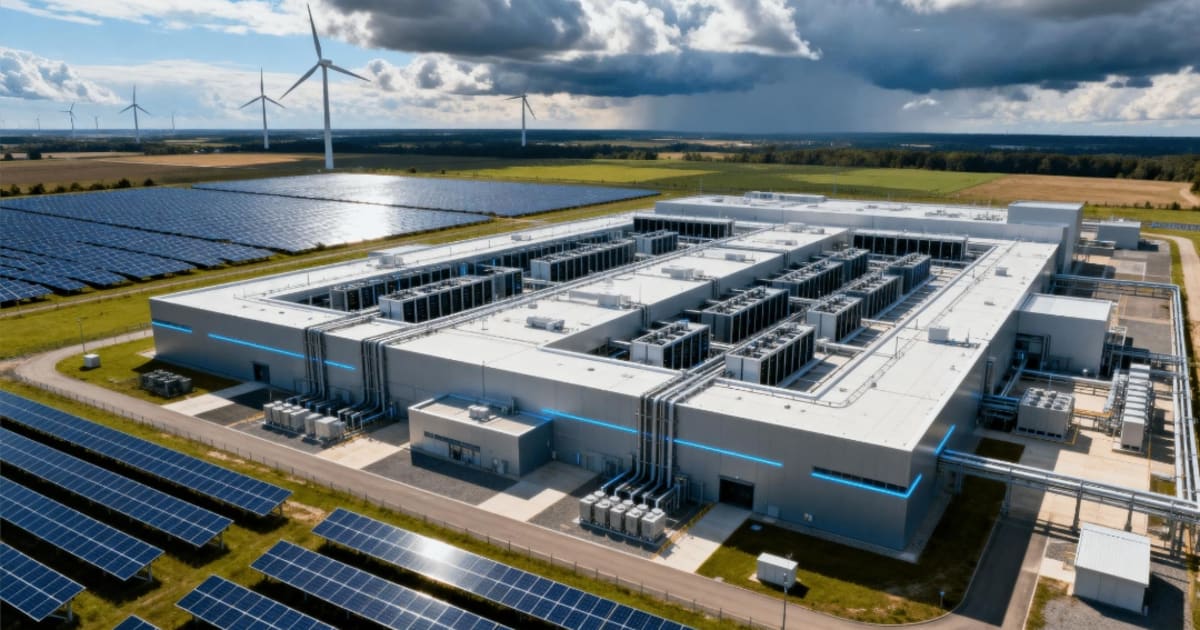
The solution involves a combination of battery energy storage systems — which can store solar power and discharge it during nighttime or cloudy periods — and round-the-clock renewable PPAs that blend solar, wind, hydro, and pumped hydro storage to provide continuous clean power. Several hyperscalers are already signing these long-term agreements with dedicated renewable generators.
Renewable-linked round-the-clock power purchase agreements can cut operating expenses by up to 30% relative to grid tariffs, making them commercially as well as environmentally attractive.
India achieved 500 GW of total installed capacity in mid-2025, with approximately 50% from renewable sources, having met its COP26 Panchamrit goals ahead of the 2030 deadline. India has committed to achieving 500 GW of total installed non-fossil fuel power capacity by 2030.
The renewable energy base is growing fast enough to power the data centre expansion — but only if the transmission infrastructure connecting renewable generation sites to data centre clusters can be built in parallel. That transmission build-out is the specific infrastructure bottleneck that the government's ₹9 lakh crore grid upgrade programme is designed to address.
Water — The Constraint Nobody Is Talking About Enough
Power gets the headlines. Water is the quietly urgent constraint that barely features in most data centre investment narratives — yet it is the one that poses the most serious long-term geographic limitation on where capacity can be built.
Data centres generate enormous heat from their computing equipment. Cooling that heat requires either air conditioning, which is itself extremely power-intensive, or water cooling, which uses large volumes of fresh water but is significantly more energy-efficient.
Electricity consumption from data centres could rise to 2.5–3% of national demand, and the combination of power and water requirements makes site selection increasingly complex.
India's four primary data centre clusters — Mumbai, Bengaluru, Chennai, and Delhi-NCR — all face water stress that is growing rather than easing as urban populations expand and climate pressures intensify. Data centres competing with residential and industrial users for increasingly scarce water supply is a constraint that neither investment commitments nor government policy can easily wish away.
This water constraint is one of the reasons new capacity is beginning to locate outside the traditional tier-1 clusters. While approximately 90% of India's data centre capacity is currently hosted in Bengaluru, Chennai, Delhi NCR, and Mumbai, Hyderabad and Pune are gaining momentum, and new projects are exploring locations with better power and water availability.
Visakhapatnam's selection for the Google-Adani campus — alongside its proximity to subsea cables — reflects this geographic diversification away from the water-stressed traditional clusters.
Government Policy — A Tax Holiday Until 2047 and Preferential Treatment
The government has moved from awareness to active facilitation of the data centre opportunity — and the policy interventions are material enough to shift the investment calculus for global operators.
The Union Budget for 2026-27 proposed a tax holiday until 2047 for foreign companies providing cloud services to customers globally by setting up data centres in India. The government has also announced preferential tax treatment to further incentivise data centre development.
A tax holiday to 2047 — effectively 21 years of protected returns — is the kind of long-duration incentive that infrastructure investors need to justify 15-year depreciation assets. Combined with the data localisation mandate from DPDP, the Infrastructure status accorded to data centres, and the priority power connectivity being arranged for critical digital infrastructure, the policy stack has materially improved the risk-adjusted return profile for data centre investment in India.
The government's IndiaAI Mission — which earmarked ₹10,300 crore and 38,000 GPUs for sovereign AI infrastructure — is the most direct public sector intervention in the compute layer. Government-owned AI compute infrastructure reduces the effective barrier to AI adoption for startups, researchers, and public sector organisations that cannot access hyperscaler pricing.
The Geographic Race — Which Cities Are Growing Fastest
Bengaluru shows the highest forecast growth at a 23.78% CAGR over 2026–2031 due to low renewable tariffs and multiple hyperscale projects. Hyperscalers are pre-committing 50–100 MW blocks and signing 15-year renewable PPAs to lock tariffs below ₹4 per kWh.
Bengaluru's combination of renewable energy access at competitive tariffs, a deep pool of software engineering talent, existing hyperscaler infrastructure, and proximity to major subsea cable landing stations makes it the fastest-growing node in India's data centre geography.
Mumbai retains dominance in absolute terms. Mumbai accounts for 52% of the country's total data centre capacity as of 2026 — a legacy of being India's financial capital and the first landing point for multiple international subsea cables. But its share is being diluted as Hyderabad, Chennai, Bengaluru, and Pune each grow faster from lower bases.
Chennai's emergence as a key node reflects both its subsea cable connectivity advantage and its lower land costs relative to Mumbai. The 220 Tbps of new subsea capacity arriving in Chennai and Mumbai — connecting India to major internet exchange points in Singapore, Dubai, and Europe — directly enables the AI data centre build-out by ensuring the international bandwidth needed to serve global customers is available at Indian shores.
The Talent Dividend — India's Underappreciated Competitive Advantage
Infrastructure and policy are often the focus of data centre investment narratives. The talent advantage gets mentioned but rarely quantified.
India has a large, cost-efficient IT and AI talent pool that supports data centre development and operations, with software engineer salaries at approximately $20,000 per annum — significantly lower than many global peers. AI capability is expanding at pace, supported by approximately 33% year-on-year growth in AI hiring, high levels of skill penetration, and a deep developer ecosystem contributing nearly 20% of global AI-related work.
This talent dimension matters for a reason that is specific to the current AI investment cycle: data centres are no longer simply infrastructure assets that run on autopilot once commissioned. AI data centres require continuous model training, evaluation, fine-tuning, and monitoring — activities that need large teams of AI engineers working alongside the physical infrastructure. A hyperscaler building a 1 GW AI campus in Visakhapatnam is not just building compute capacity — it is building an AI operations hub that needs hundreds of trained professionals.
India's AI talent pipeline — produced by its engineering colleges, its decades of software services experience, and the growing domestic AI startup ecosystem — is the complementary asset that makes a 1 GW AI campus in Andhra Pradesh commercially viable in a way that a 1 GW campus in, say, a talent-scarce location would not be.
The Key Players — Who Is Building India's Data Centre Future
The Indian data centre market is being built by a combination of domestic conglomerates, global hyperscalers, and specialist data centre operators.
On the domestic side, Adani's AdaniConneX JV with EdgeConneX has the most ambitious pipeline — the Google partnership in Visakhapatnam alone represents 1 GW of planned capacity. Reliance's Jamnagar facility, if delivered as announced, would triple India's existing capacity. Yotta Data Services, backed by Hiranandani Group, targets 10,000 MW by 2030 from its current multi-campus base. Nxtra Data, Airtel's data centre subsidiary, has committed $1 billion in expansion.
December 2025 saw AdaniConneX commission a 400 MW Chennai campus with 200 MW of integrated renewables and Tier 4 certification, while November 2025 saw Yotta raise $200 million debt to fund a 250 MW Greater Noida project including 100 MW solar and 50 MW battery storage.
On the specialist operator side, CtrlS is developing a 612 MW campus at its Chandan Valley Industrial Park near Hyderabad. STT GDC India, NTT Data, and Equinix are all active across the tier-1 clusters.
The hyperscalers — AWS, Microsoft Azure, Google Cloud — are increasingly moving from pure colocation customers to owner-operators, building their own campuses rather than leasing space from third-party operators. Hyperscalers are pre-committing 50–100 MW blocks and signing 15-year renewable PPAs, achieving power costs below ₹4 per kWh while accommodating GPU clusters.
The Risks — What Could Slow the Trajectory
No objective analysis of India's data centre opportunity can omit the risk factors, even in an environment of genuine structural momentum.
Power connectivity delays. The single most frequently cited operational risk is the gap between data centre commissioning and power grid connection. Building a facility takes 18–24 months. Getting a new power connection sanctioned, metered, and delivered reliably can take longer in some geographies. Data centre operators sitting on finished facilities waiting for power connectivity is a real and documented phenomenon in India.
Water scarcity intensification
Climate change is making India's existing water stress worse rather than better. A prolonged drought year in Karnataka or Tamil Nadu would force data centre operators in those states to significantly curtail cooling operations unless water recycling investments have been made upfront.
Regulatory uncertainty beyond DPDP
The DPDP Act creates certainty on data localisation. But subordinate rules — governing exactly what constitutes personal data, what the transfer mechanisms are, and how enforcement will work — are still being finalised. Operators building compliance infrastructure before those rules are settled carry revision risk.
Skilled talent at scale
AI hiring is growing at 33% year-on-year, but the absolute number of trained AI operations professionals remains limited relative to the capacity being planned. The talent advantage exists at the current scale of the industry. Whether it holds as capacity quintuples is a question that workforce planners are already beginning to flag.
What to Watch — The Milestones That Define 2026-2027
Jamnagar commissioning
Reliance's AI data centre for Meta begins operations within the next 18 months. When the first megawatts go live, it will be the first visible signal of whether India's most ambitious domestic data centre project can deliver on its timeline.
Visakhapatnam land acquisition and construction commencement
The Google-Adani 1 GW campus has been announced and financed but needs physical construction to begin at scale. Watch for groundbreaking announcements and initial phase commissioning dates.
Grid connectivity capacity announcements
The government's power transmission upgrade programme is critical context for data centre expansion. Watch for state-level announcements about dedicated data centre power zones and priority grid connectivity schemes.
KPMG and Deloitte FY27 capacity utilisation data
Both firms track actual commissioned versus announced capacity with a lag. The gap between what's announced and what's live will be the most accurate indicator of whether the build-out is on schedule.
PLI scheme for BESS
Battery energy storage is the enabling technology for reliable renewable-powered data centres. Government support for domestic BESS manufacturing would reduce the cost and supply chain risk for the cooling and backup systems that every data centre requires.
The Bigger Picture — India's Digital Infrastructure Moment
As the Asia-Pacific prepares to receive nearly $800 billion in data centre investment by 2030, India has the opportunity to emerge as a global hub if it resolves the power challenge. The question is no longer whether data centre growth will happen. The question is: Can it be powered cleanly, reliably and at scale?
The demand is established, the capital is committed, and the policy environment is supportive. The enabling constraint — reliable, clean power at the required scale — is the variable that will determine whether India's data centre decade delivers on its extraordinary potential or leaves a significant fraction of its announced capacity sitting on paper rather than operating in production.
India achieved 500 GW of installed power capacity in 2025 — a milestone that arrived five years ahead of schedule. Its renewable energy buildout has consistently exceeded the expectations of sceptics. The data centre industry is betting, with $100 billion of committed capital, that the power infrastructure can do the same.
If it can, the gap between India hosting 5% of the world's data centres while consuming 20% of the world's data will close dramatically before 2031. The $100 billion opportunity will become $200 billion. And India's data centre sector will have made the same leap that its software services sector made in the 1990s — from peripheral participant to global essential.
The infrastructure to make that happen is being built right now, across 77 cities, on campuses that range from 50 MW to 1 GW, powered by renewable energy signed under 15-year contracts, and staffed by the engineers who contribute nearly 20% of global AI work.
The decade has started. The only question left is execution

Nikunjj Jhawar is a Chartered Accountant (CA) and Chartered Financial Analyst (CFA) with nearly two decades of experience in the financial services industry. Having worked with global institutions such as HSBC and Credit Suisse in investment-related roles, he brings deep expertise in finance and markets. He is the Founder of mangopeoplenews.com, where he focuses on making complex topics in finance, markets and business accessible and relevant to everyday readers.