

India's $1 Trillion Export Dream: Can Manufacturing, Services And FTAs Power The Next Leap?

India has set itself one of its most ambitious economic targets yet—crossing $1 trillion in annual exports of goods and services during FY27.
The target comes after the country achieved record exports of about $863 billion in FY26, comprising roughly $442 billion in merchandise exports and $421 billion in services exports. To bridge the remaining gap of nearly $137 billion, the government expects merchandise exports to grow by 16–17%, while services exports are projected to rise by 10–11% during the current financial year.
Commerce and Industry Minister Piyush Goyal believes the goal is ambitious but achievable. However, he has also made it clear that Indian businesses will have to move beyond the comfort of serving only the domestic market and become globally competitive on quality, scale and innovation.
If India succeeds, it would mark another milestone in its journey towards becoming one of the world's largest manufacturing and services hubs.
India's Export Story Has Changed Dramatically Over Two Decades
India's export journey has accelerated significantly over the past 20 years.
In the early 2000s, the country's total exports were well below $100 billion. Since then, rapid growth in IT services, pharmaceuticals, engineering goods, petroleum products and more recently electronics manufacturing has transformed India's trade profile.
Today, exports are no longer driven by just traditional sectors like textiles or gems and jewellery. Instead, India's export basket now includes Engineering goods, Petroleum products, Electronics, Pharmaceuticals, Chemicals, Automobiles and auto components, Agricultural products, Software and digital services, Business process outsourcing (BPO) and Global capability centres (GCCs).
This diversification has made India's export engine more resilient even during periods of global uncertainty.
How India Plans To Reach The $1 Trillion Milestone
To achieve the $1 trillion target, the government is pursuing a multi-pronged strategy. The broad objective is to expand both merchandise and services exports simultaneously instead of relying on a single sector. The roadmap includes:
Expanding manufacturing through Production-Linked Incentive (PLI) schemes.
Leveraging recently signed Free Trade Agreements (FTAs).
Supporting MSMEs through export promotion initiatives.
Improving product quality and certification.
Developing overseas warehousing and logistics.
Increasing market access in developed economies.
Encouraging states to become active partners in export promotion.
During the recent Board of Trade meeting, the Centre also asked states to hold regular export-focused reviews and align local industrial policies with the national export strategy.
Strong Start To FY27 Gives The Government Confidence
One reason policymakers remain optimistic is the encouraging performance during the first quarter of FY27. According to the Commerce Ministry, merchandise exports grew by more than 15% year-on-year during the April–June quarter, putting India broadly on track towards the annual target if the momentum can be sustained.
While quarterly growth alone does not guarantee success, it provides an encouraging foundation for the rest of the year.
The challenge will be maintaining this pace despite slowing global demand and ongoing geopolitical uncertainties.
Why Piyush Goyal Wants Indian Companies To Leave Their 'Comfort Zone'
One of the most striking messages from the Commerce Minister was directed at Indian businesses themselves. According to Goyal, many companies have become comfortable serving India's rapidly expanding domestic market. However, competing globally requires a different mindset. Export-oriented companies need:
Larger production scale.
Better quality standards.
International certifications.
Competitive pricing.
Faster product innovation.
Strong global distribution networks.
His message was simple: India's domestic market offers significant opportunities, but sustained long-term growth will require Indian companies to build globally competitive businesses rather than relying solely on local demand.
Free Trade Agreements Could Become India's Biggest Export Accelerator
Trade agreements are expected to play a major role in achieving the $1 trillion target. India has already operationalised or concluded agreements with UAE, Australia, Mauritius and European Free Trade Association (EFTA).
The India–UK Free Trade Agreement, expected to come into force in July, is considered particularly significant because the UK imports far more goods than India currently exports to it, creating substantial room for expansion. Negotiations with the European Union, Oman, United States and New Zealand are also progressing.
Lower tariffs and improved market access could make Indian products more competitive across some of the world's largest consumer markets.
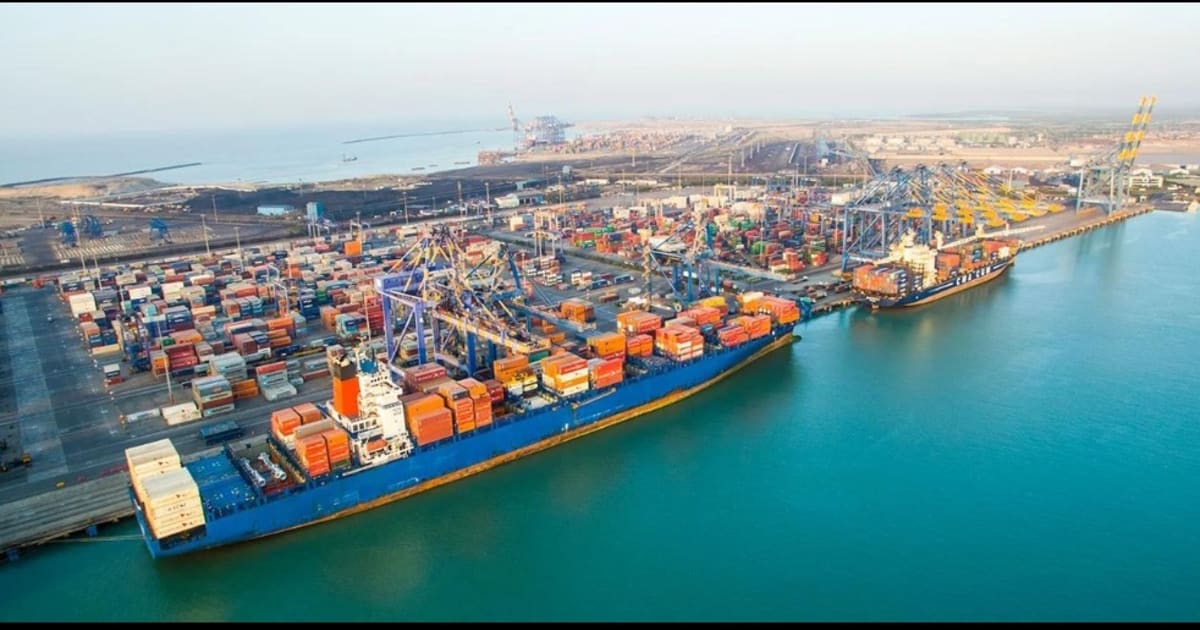
Which Sectors Will Drive India's Export Growth?
Unlike previous export cycles that relied heavily on petroleum products and traditional manufacturing, the next phase is expected to be much broader. The biggest contributors are likely to include:
Electronics manufacturing
Engineering goods
Pharmaceuticals
Chemicals
Defence equipment
Agricultural exports
Software services
Financial and professional services
Automotive components
Renewable energy equipment
Among these, electronics has emerged as one of India's fastest-growing export categories, supported by the PLI scheme and rising global interest in diversifying supply chains away from China.
Sector Wise Growth Drivers, Opportunities & Challenges
Electronics Has Become India's Fastest-Growing Export Story
Just a decade ago, electronics accounted for a relatively small share of India's export basket. Today, it has emerged as one of the country's biggest growth engines. Driven by the Production-Linked Incentive (PLI) scheme, global supply chain diversification and rising investments by multinational manufacturers, electronics exports have surged sharply over the past few years.
Smartphones have become the biggest success story - Global manufacturers such as Apple, through contract manufacturers like Foxconn, Tata Electronics and Pegatron, are increasingly using India as an export hub. Industry estimates suggest smartphone exports alone are expected to cross $30 billion in FY27, making India one of the world's fastest-growing electronics manufacturing destinations.
The government's long-term ambition is not just to assemble products but to gradually move up the value chain into components, semiconductors and advanced electronics manufacturing.
Engineering Goods Continue To Anchor Merchandise Exports
While electronics is grabbing headlines, engineering goods remain India's largest merchandise export category. The sector includes Industrial machinery, Auto components, Capital goods, Steel products, Electrical equipment, Railway equipment and Heavy engineering.
Engineering exports benefit from India's growing manufacturing ecosystem and improving global competitiveness. As infrastructure spending increases across emerging economies, Indian engineering companies are finding opportunities in Africa, Southeast Asia, the Middle East and Europe. Government officials expect engineering exports to remain one of the biggest contributors towards the merchandise export target.
Services Exports Could Become India's Biggest Long-Term Advantage
Merchandise exports often dominate discussions, but India's real competitive advantage may lie in services. The country has become a global leader in IT services, Software development, BPO, Consulting, Financial services, Global Capability Centres (GCCs), Engineering design and Research & Development.
Unlike manufacturing exports, services require relatively lower logistics costs and are less affected by global shipping disruptions.
India's expanding digital economy, combined with increasing adoption of artificial intelligence, cloud computing and cybersecurity services, is expected to create fresh export opportunities over the coming decade.
Many analysts believe services exports could eventually exceed half a trillion dollars annually, becoming the single largest contributor to India's external trade.
Pharmaceuticals Are Strengthening India's Global Position
India continues to be recognised as the "pharmacy of the world." The country supplies affordable generic medicines to more than 200 countries and remains one of the largest vaccine producers globally. Export opportunities are expanding across Generic medicines, Specialty pharmaceuticals, Biosimilars, APIs and Medical devices.
Government initiatives encouraging domestic API manufacturing are also expected to reduce import dependence while strengthening export competitiveness. With ageing populations and rising healthcare spending worldwide, pharmaceuticals remain one of India's most resilient export sectors.
Defence Exports Are Emerging As A New Growth Engine
A decade ago, India's defence exports were relatively insignificant, today, the picture is changing rapidly.
The government's Make in India and Atmanirbhar Bharat initiatives have encouraged domestic production of Artillery systems, Missiles, Naval platforms, Aircraft components, Defence electronics and Radar systems.
Indian defence products are now reaching dozens of countries, and policymakers believe exports from this sector could multiply over the next several years. Companies such as HAL, Bharat Electronics, Bharat Dynamics, Mazagon Dock, Cochin Shipyard, and a growing number of private manufacturers are expected to benefit from rising international demand.
China+1 Strategy Is Creating A Once-In-A-Generation Opportunity
Global companies have increasingly sought to diversify supply chains beyond China. This "China+1" strategy has emerged because of:
Geopolitical tensions.
Rising labour costs in China.
Supply chain disruptions witnessed during the pandemic.
Trade restrictions between major economies.
India is positioning itself as one of the largest beneficiaries of this shift.
Large multinational companies are expanding manufacturing facilities across Electronics, Chemicals, Auto components, Renewable energy equipment and Consumer goods.
If India can continue improving infrastructure, logistics and ease of doing business, it could capture a much larger share of global manufacturing exports.
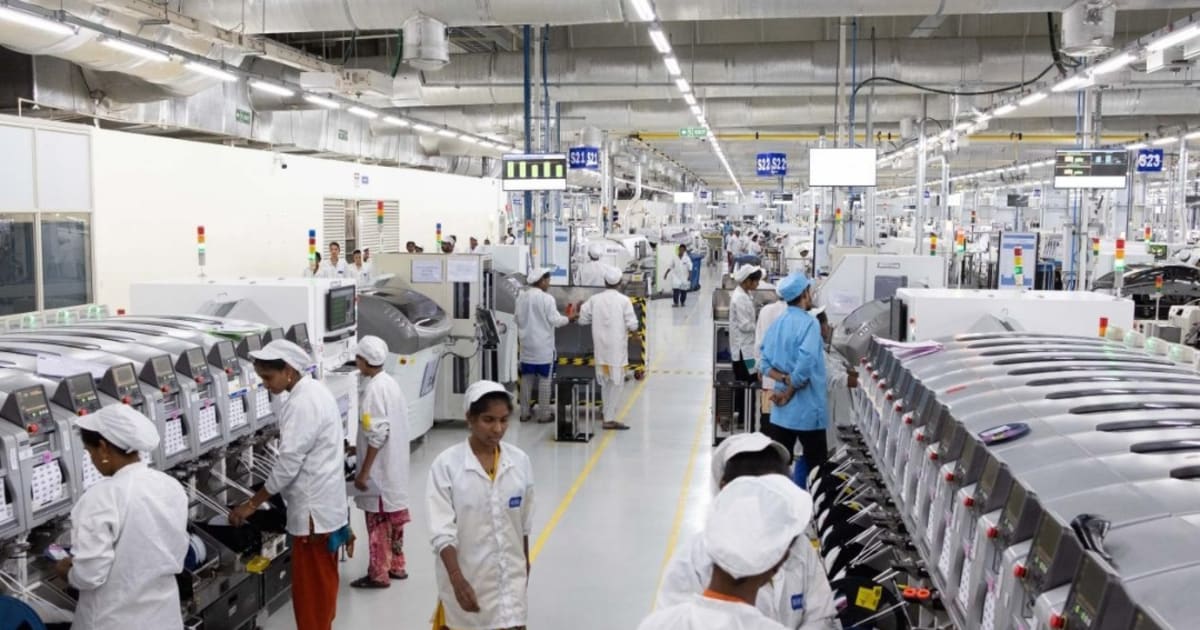
MSMEs Will Play A Critical Role In Achieving The Target
Large corporations alone cannot deliver a trillion-dollar export economy. India's millions of Micro, Small and Medium Enterprises (MSMEs) contribute significantly to manufacturing employment and export production. The government is therefore focusing on:
Easier export financing.
Digital trade platforms.
Quality certification.
Logistics support.
Export clusters.
Market access programmes.
Helping smaller businesses integrate into global value chains will be essential if India hopes to sustain export growth over the long term.
Export Promotion Mission Aims To Improve Coordination
To accelerate exports, the Centre has proposed a dedicated Export Promotion Mission involving close coordination between the Union Government, state governments and industry. The initiative seeks to address long-standing bottlenecks such as:
High logistics costs.
Delays in customs clearances.
Limited overseas warehousing.
Compliance complexity.
Access to export credit.
A more coordinated policy framework could improve India's competitiveness against countries like Vietnam, Thailand and Mexico.
Challenges Could Make The $1 Trillion Target Difficult
Despite the optimism, achieving the target will not be easy. Several external and domestic risks remain. These include:
Weak global economic growth.
Geopolitical conflicts.
Protectionist trade policies.
Currency volatility.
High freight costs.
Supply chain disruptions.
Rising competition from Vietnam and Bangladesh.
Slowing demand in Europe and the United States.
In addition, India's logistics costs remain higher than those of several competing export-oriented economies. Addressing these structural issues will be critical for sustaining export momentum.
Can India Realistically Achieve The $1 Trillion Export Target?
The government's target is undoubtedly ambitious, but it is not unrealistic. India has already crossed $863 billion in combined goods and services exports in FY26. To touch the $1 trillion milestone, exports need to grow by roughly 16% over the previous year.
That pace is challenging but achievable if several favourable factors come together:
Merchandise exports continue their double-digit growth.
Services exports maintain their strong momentum.
Recently signed Free Trade Agreements begin yielding benefits.
Global demand remains stable despite geopolitical uncertainties.
Domestic manufacturing capacity expands further.
Unlike previous decades, India's export growth is now supported by multiple sectors rather than depending on a handful of industries.
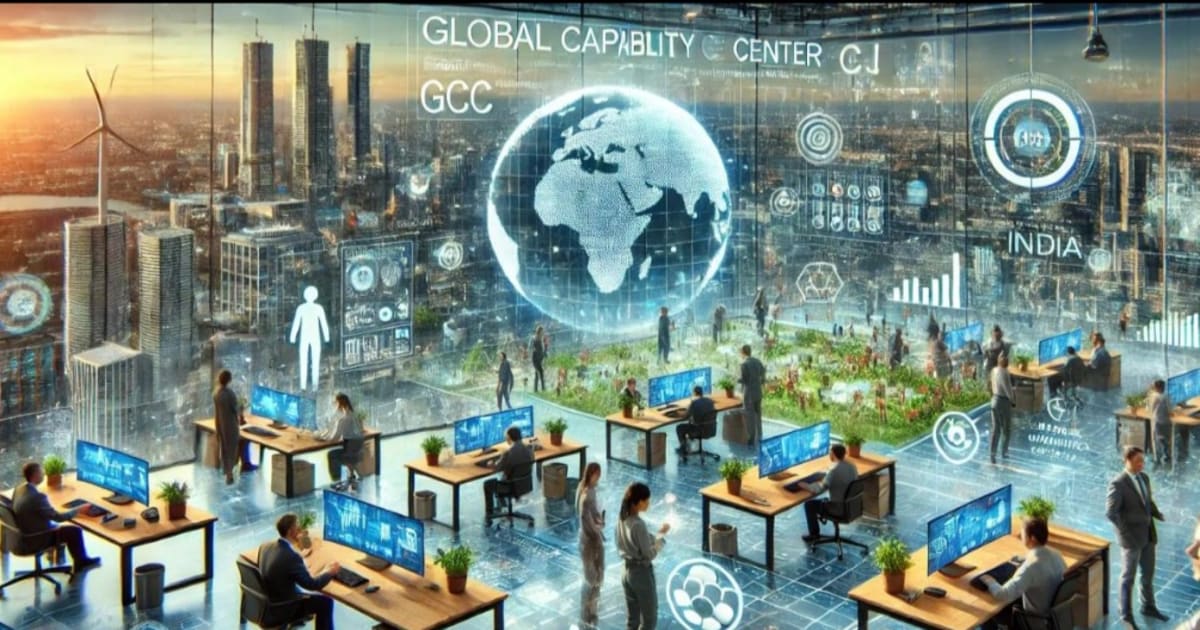
India's $1 Trillion Export Target: The Bottom Line
India's trillion-dollar export ambition represents far more than a trade milestone. It reflects the country's broader aspiration to become a global manufacturing hub while reinforcing its leadership in high-value services.
The encouraging start to FY27, expanding electronics production, strong IT services, rising defence exports and a growing network of Free Trade Agreements provide a solid foundation.
However, achieving the target will require businesses to embrace global markets more aggressively, invest in quality and innovation, and build internationally competitive products.
As Commerce Minister Piyush Goyal has emphasised, India's next phase of growth will depend not just on government policy but also on Indian companies stepping outside their comfort zones and competing confidently on the global stage.
If that transformation continues, the trillion-dollar milestone may become not the finish line, but the beginning of India's next export growth story.

Nikunjj Jhawar is a Chartered Accountant (CA) and Chartered Financial Analyst (CFA) with nearly two decades of experience in the financial services industry. Having worked with global institutions such as HSBC and Credit Suisse in investment-related roles, he brings deep expertise in finance and markets. He is the Founder of mangopeoplenews.com, where he focuses on making complex topics in finance, markets and business accessible and relevant to everyday readers.
