

Why MSC Wants A Piece Of Vizhinjam: Can India's New Mega Port Rewrite Global Shipping Routes?
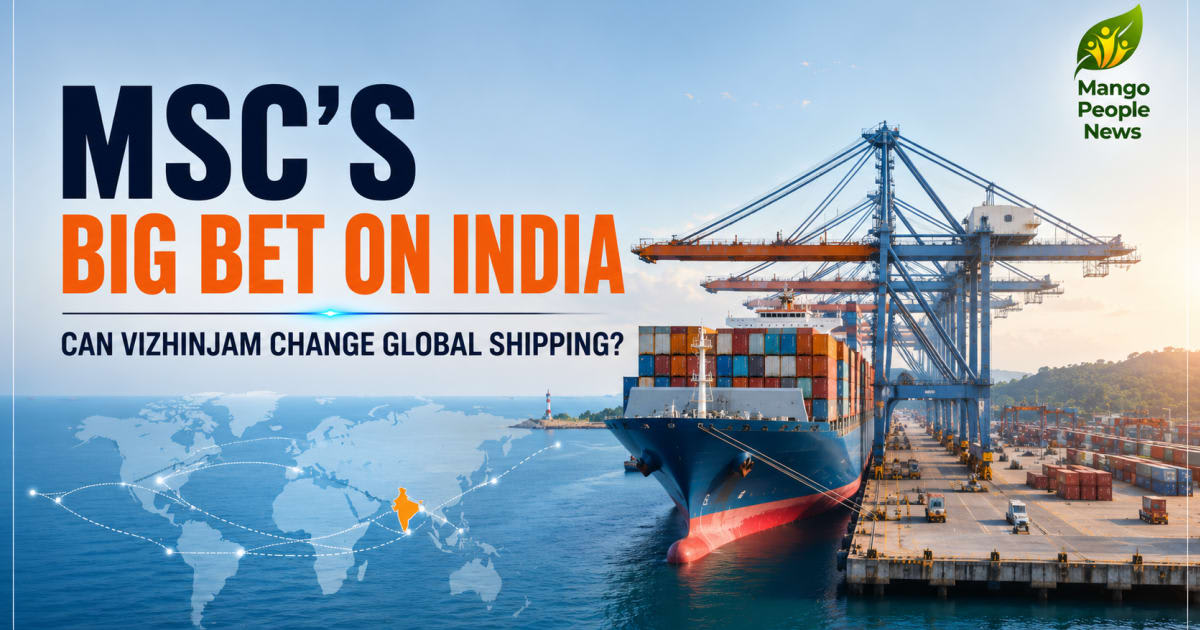
For decades, India has been one of the world's fastest-growing trading economies, yet a large portion of its container cargo has taken an expensive detour before reaching global markets.
Instead of moving directly through Indian ports, nearly 70-75% of India's transshipment cargo has historically been routed through foreign hubs such as Colombo, Singapore, Port Klang and Jebel Ali. This has increased logistics costs, extended shipping times and diverted valuable port revenues overseas.
That could finally be changing.
The proposed investment by Mediterranean Shipping Company (MSC) in Kerala's Vizhinjam International Seaport is about much more than buying a stake in a port. It signals growing global confidence that India could finally emerge as a major transshipment hub capable of competing with some of the world's busiest ports.
For Adani Ports and Special Economic Zone (APSEZ), which developed and operates Vizhinjam, the interest from the world's largest container shipping company also serves as validation of a project that took years to overcome financial, political and engineering challenges.
If successful, Vizhinjam could reshape India's maritime economy while strengthening the country's position in global supply chains.
Why Has India Relied On Foreign Ports For So Long?
India has more than 7,500 kilometres of coastline and handles a significant share of global trade by sea. Yet despite this geographic advantage, the country has lacked a world-class deepwater transshipment port capable of handling the largest container vessels efficiently.
As a result, containers originating from Indian ports have often followed a two-step journey:
Cargo is shipped from Indian ports to a foreign transshipment hub. It is then transferred to larger intercontinental vessels heading to Europe, Africa or North America. This additional handling increases Logistics costs, Transit time, Fuel consumption, Port handling charges and Dependence on overseas infrastructure.
Industry estimates suggest India loses substantial revenue each year because this transshipment business is captured by competing ports outside the country.
What Makes Vizhinjam Different?
Vizhinjam possesses several natural advantages that few ports around the world can match.
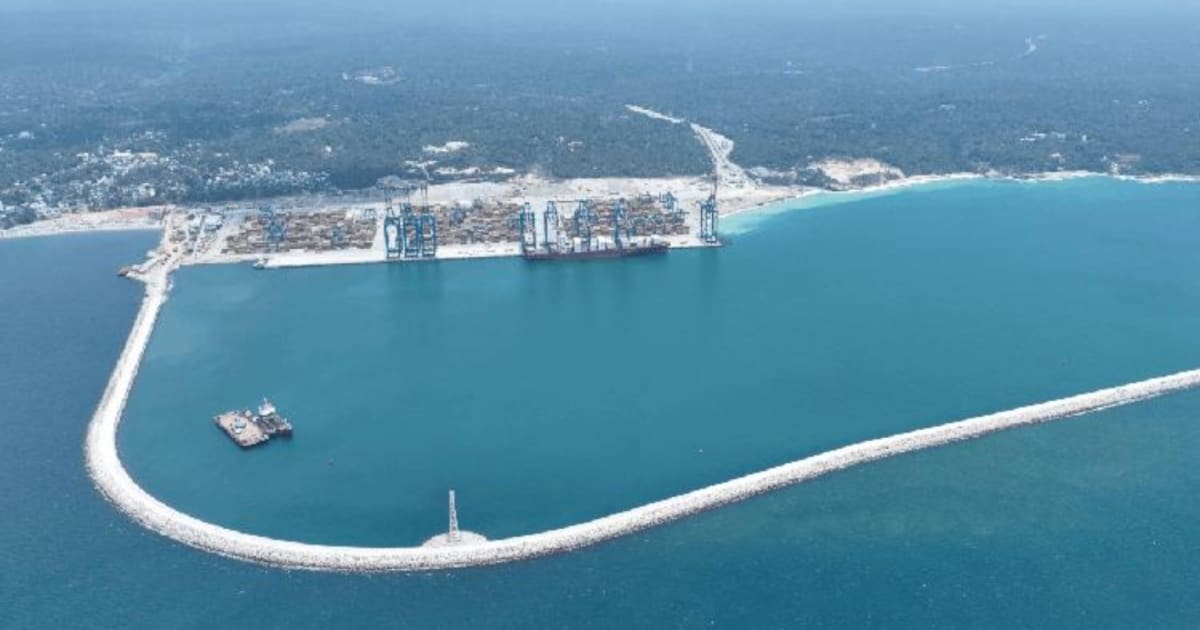
Natural Deep Draft. Unlike many ports that require continuous dredging, Vizhinjam naturally offers water depths of around 18–20 metres, allowing some of the world's largest container ships to berth with minimal maintenance.
Close To Global Shipping Lanes
Perhaps its biggest advantage is location.
The port lies only around 10 nautical miles from one of the world's busiest east-west international shipping routes connecting Europe, Middle East, Africa, South Asia and Southeast Asia. For shipping companies, every nautical mile saved translates into lower fuel costs, shorter voyage times and improved fleet efficiency.
That makes Vizhinjam an attractive option for global shipping lines.
How Adani Ports Turned A Long-Delayed Dream Into Reality
The Vizhinjam project has been discussed for decades. Successive governments recognised its strategic potential, but progress remained slow because of funding constraints, legal disputes and implementation challenges.
The project gathered momentum after Adani Ports and Special Economic Zone (APSEZ) won the concession to develop, operate and maintain the port. Since then, the company has invested heavily in:
Breakwater construction.
Deepwater berths.
Container terminals.
Port equipment.
Road connectivity.
Operational infrastructure.
For Adani Ports, Vizhinjam represents much more than another port in its network. It is designed to become India's flagship transshipment hub and strengthen the company's position as one of the world's leading integrated port operators.
Transshipment Ports Are Among The Most Valuable Assets In Global Shipping
Unlike conventional ports that mainly handle domestic imports and exports, transshipment hubs function as global distribution centres.
Large mother vessels unload containers, which are then sorted and transferred onto smaller ships serving regional destinations. This hub-and-spoke model creates several advantages Higher cargo throughput, Better asset utilisation, Strong economies of scale, Recurring shipping traffic and Long-term relationships with global shipping lines.
Successful transshipment ports often become logistics ecosystems that attract Warehousing, Free trade zones, Distribution centres, Manufacturing and Value-added logistics.
This explains why ports such as Singapore and Dubai have become powerful economic engines far beyond maritime trade.
India's Trade Growth Is Creating The Right Conditions
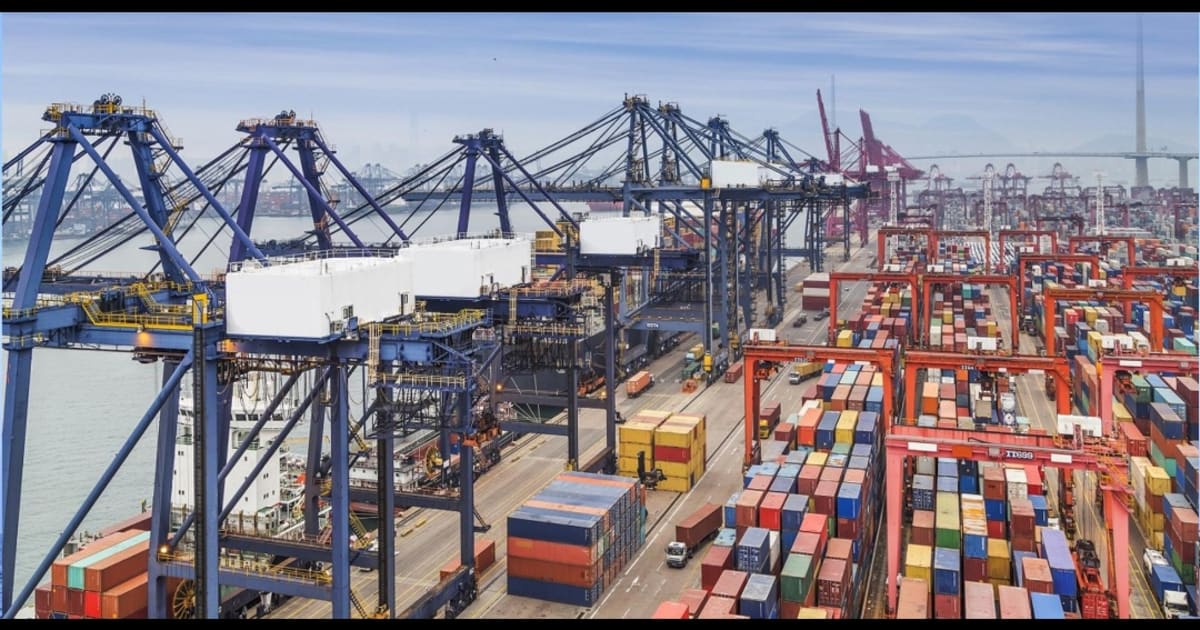
India's merchandise exports, rising containerisation and increasing manufacturing activity are steadily boosting demand for modern port infrastructure. Government initiatives such as PM Gati Shakti, Sagarmala Programme, Dedicated Freight Corridors, National Logistics Policy and Make in India
are all aimed at reducing logistics costs and improving supply chain efficiency.
A globally competitive transshipment port complements these initiatives by allowing Indian cargo to move directly into international shipping networks rather than relying on overseas hubs.
Vizhinjam Could Become A Gateway For India's Manufacturing Ambitions
As multinational companies diversify supply chains under the China+1 strategy, efficient logistics have become a critical factor in attracting investment. Manufacturers increasingly evaluate Port connectivity, Shipping frequency, Container availability, Customs efficiency and Logistics costs.
A world-class transshipment hub could therefore strengthen India's competitiveness as a manufacturing destination while supporting export growth. For this reason, Vizhinjam is not just an infrastructure project—it could become a strategic asset in India's broader industrial transformation.
Why MSC's Interest Matters
MSC is not just another shipping company. It is the largest container shipping line in the world, operating thousands of vessels and serving hundreds of ports across every major continent.
When a company of MSC's scale considers investing in a port, it usually reflects long-term strategic thinking rather than a purely financial investment. A stake in Vizhinjam could provide MSC with:
Greater operational control.
Dedicated terminal capacity.
Faster vessel turnaround.
Better integration with its global shipping network.
Lower operating costs.
For India, having one of the world's biggest shipping companies committed to Vizhinjam could significantly increase the port's credibility among other global shipping operators.
Investment Perspective: Who Stands To Gain?
From an investment standpoint, Vizhinjam should be viewed as part of a much broader logistics transformation.
Adani Ports & Special Economic Zone (APSEZ)
Higher container throughput.
Increased transshipment revenue.
Growth in integrated logistics services.
Stronger international positioning.
Logistics & Rail
Potential beneficiaries include:
Container Corporation of India (CONCOR).
Rail Vikas Nigam (RVNL).
IRCON International.
RITES.
As cargo volumes increase, demand for rail freight, multimodal transport and logistics planning is likely to rise.
Warehousing & Industrial Infrastructure
Growth in port activity could support companies involved in:
Industrial parks.
Warehousing.
Container freight stations.
Cold storage.
Supply chain management.
Shipping Ecosystem
Higher cargo volumes may also benefit:
Shipping agencies.
Marine services.
Bunkering businesses.
Ship repair facilities.
Customs and freight forwarding companies.
The opportunity therefore extends well beyond a single listed company.
The Bottom Line
MSC's interest in Vizhinjam is about far more than acquiring an equity stake. It reflects growing confidence that India is finally building the infrastructure needed to become a serious player in global container shipping.
For years, Indian exporters and importers have relied on foreign ports for transshipment, resulting in higher logistics costs and lost economic value.
Vizhinjam has the potential to reverse that trend.
Its natural harbour, strategic location close to major international shipping lanes and backing from Adani Ports make it one of India's most important infrastructure projects.
If supported by efficient execution, strong connectivity and sustained cargo growth, Vizhinjam could reshape India's maritime landscape, strengthen export competitiveness and create long-term opportunities across ports, logistics, rail freight and manufacturing.
The port's success will not be measured only by the number of ships it handles—it will be judged by whether it helps India retain a much larger share of global trade within its own shores.

Nikunjj Jhawar is a Chartered Accountant (CA) and Chartered Financial Analyst (CFA) with nearly two decades of experience in the financial services industry. Having worked with global institutions such as HSBC and Credit Suisse in investment-related roles, he brings deep expertise in finance and markets. He is the Founder of mangopeoplenews.com, where he focuses on making complex topics in finance, markets and business accessible and relevant to everyday readers.
