

Vaping May Not Save You From Higher Insurance Premiums. Here's Why Insurers Still Treat Users As Smokers
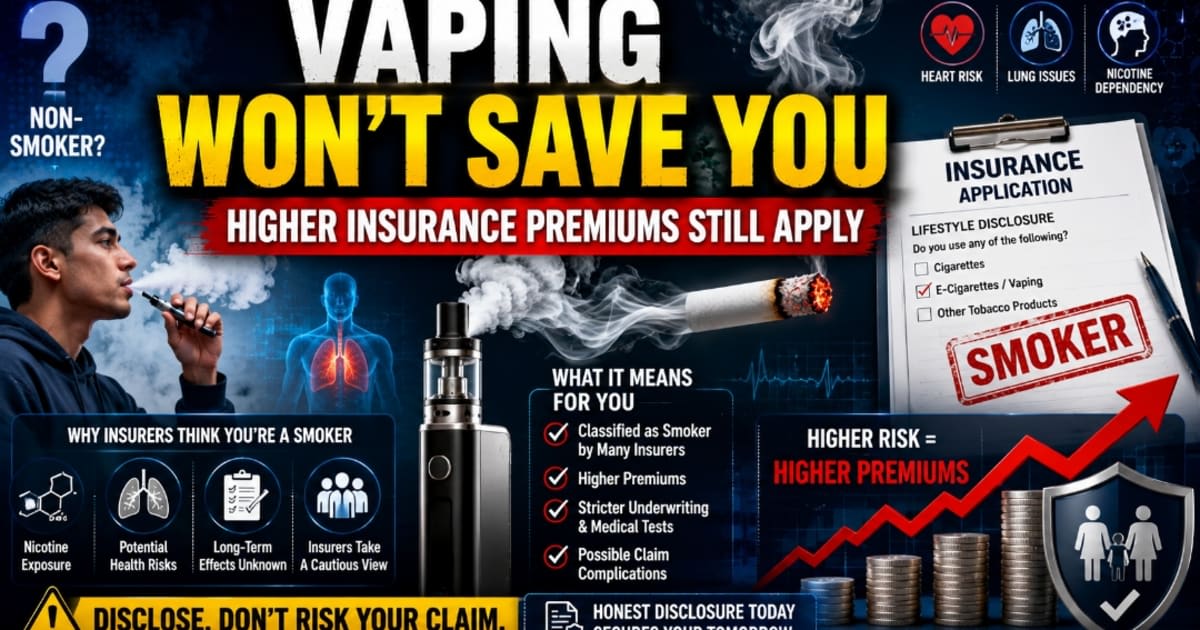
Many people switch to vaping believing it is a safer alternative to traditional cigarettes. Some also assume that using e-cigarettes or vaping devices could help them avoid the higher insurance premiums usually charged to smokers.
However, insurance companies are increasingly making it clear that vaping users may still fall under the "smoker" category while purchasing life or health insurance policies.
That means individuals who vape could still face higher premiums, stricter underwriting and additional disclosures while applying for insurance coverage.
Why Insurers Are Concerned About Vaping
Insurance companies calculate premiums based on health risks and life expectancy probabilities.
Traditional smoking has long been linked to:
Heart disease
Lung disorders
Cancer risks
Respiratory complications
While vaping is often marketed as a reduced-risk alternative, insurers argue that long-term health effects are still not fully understood.
Many e-cigarettes and vaping devices continue to contain nicotine — a substance associated with addiction and several health concerns.
As a result, insurers remain cautious while assessing vaping users.
Vaping Users Often Classified As Smokers
Several insurers now ask applicants specific questions about:
Cigarette smoking
E-cigarette usage
Nicotine consumption
Vaping frequency
Tobacco alternatives
If applicants disclose regular vaping or nicotine use, insurers may classify them similarly to smokers during underwriting.
This can result in:
Higher premiums
Additional medical checks
Restricted policy terms
Lower-risk category rejection
The exact treatment varies depending on the insurer, product type and usage history.
Why Disclosure Matters
Insurance experts strongly advise applicants to disclose vaping habits honestly while purchasing policies.
Failing to disclose nicotine or vaping usage could create problems later during claim settlement.
If insurers discover that relevant health or lifestyle information was hidden during policy issuance, disputes may arise at the time of claims. Transparency during policy application remains critical.
The Science Around Vaping Is Still Evolving
One reason insurers remain cautious is the lack of long-term medical data.
Unlike traditional cigarettes, vaping products are relatively newer, and researchers are still studying:
Long-term lung impact
Cardiovascular risks
Nicotine dependency effects
Chemical exposure consequences
Because uncertainty remains, insurers often prefer taking a conservative underwriting approach.
Young Consumers Are Driving Vaping Growth
Vaping usage has grown significantly among younger consumers globally.
Many users view e-cigarettes as:
A smoking replacement
A social lifestyle product
A step toward quitting tobacco
A less harmful nicotine option
However, insurers focus less on perception and more on measurable health risk probabilities.
Insurance Industry Is Becoming More Data-Driven
Modern underwriting increasingly relies on:
Medical analytics
Lifestyle disclosures
Health scoring models
Risk segmentation
As insurers gather more health data over time, underwriting policies around vaping could evolve further.
Some companies may eventually differentiate occasional vaping from heavy nicotine dependence. Others may continue treating both similarly.
What Policy Buyers Should Know
Individuals who vape should:
Read policy terms carefully
Disclose nicotine usage honestly
Compare insurer underwriting policies
Understand premium implications
Maintain accurate medical records
Different insurers may apply different risk classifications, making product comparison important.
The Bigger Picture
The growing debate around vaping highlights how insurance companies are adapting to changing lifestyle trends and emerging health risks.
While vaping may be perceived by some consumers as a less harmful alternative to smoking, the insurance industry remains cautious because long-term medical certainty is still limited.
For policy buyers, the message is becoming increasingly clear: switching from cigarettes to vaping may not necessarily help avoid the financial consequences associated with smoker classifications.
At least for now, insurers appear more focused on nicotine exposure and potential health risks than on how that nicotine is consumed.

Nikunjj Jhawar is a Chartered Accountant (CA) and Chartered Financial Analyst (CFA) with nearly two decades of experience in the financial services industry. Having worked with global institutions such as HSBC and Credit Suisse in investment-related roles, he brings deep expertise in finance and markets. He is the Founder of mangopeoplenews.com, where he focuses on making complex topics in finance, markets and business accessible and relevant to everyday readers.


