

The Trillion-Dollar Game Nobody Fully Understands: Inside the AI Funding Frenzy That Is Rewriting the Rules of Money, Power, and Technology

Let's just pause for a moment and sit with a number.
Anthropic — a company that did not exist five years ago, that has never turned an annual profit, that sells access to a chatbot called Claude — is reportedly in talks to raise $30 billion at a valuation that could exceed $900 billion. That would make it, by private market standards, more valuable than JPMorgan Chase. More valuable than Visa. More valuable than almost every company that has ever existed in the history of human commerce — except a handful of tech giants, some oil companies, and now apparently the makers of an AI assistant.
Anthropic is in early talks with investors to raise at least $30 billion in fresh financing, with discussions centred on a pre-money valuation exceeding $900 billion. The round is expected to close as soon as the end of this month, though no term sheet has been signed. (Storyboard18)
And here is the part that is easy to miss in the headline: this is not even the biggest fundraise happening in AI right now. It is not even close.
THE SCOREBOARD: WHAT EVERY MAJOR AI PLAYER IS ACTUALLY WORTH
Before unpacking what is really going on here, it helps to have the numbers laid out clearly, because the scale of what is happening in AI finance right now is genuinely difficult to comprehend in the abstract.
OpenAI closed a $122 billion funding round on March 31, 2026 — the largest private financing deal in Silicon Valley history — at a post-money valuation of $852 billion. The bulk of the funding came from Amazon ($50 billion), Nvidia ($30 billion), and SoftBank ($30 billion). OpenAI is generating $2 billion in revenue per month and made $13.1 billion in revenue last year. It is still burning cash and is not yet profitable.
Anthropic completed a Series G round earlier this year at a $380 billion post-money valuation, raising $30 billion led by GIC and Coatue. Its run-rate revenue has grown to $14 billion, with this figure growing over 10x annually for each of the past three years. Eight of the Fortune 10 are now Claude customers. And now, just three months later, it is reportedly raising again at more than double that valuation.
xAI — Elon Musk's AI company — raised over $42 billion in total funding before SpaceX acquired xAI in February 2026 at a combined valuation of $1.25 trillion. Grok reached approximately 64 million monthly active users by early 2026.
Perplexity sits at around $20 billion in valuation. Cursor/Anysphere is in talks at $50 billion. Scale AI at $13 billion. CoreWeave at $19 billion.
Google's Gemini is harder to value independently — it is embedded inside Alphabet, which as we established recently crossed $4.8 trillion in market cap on the back of AI momentum. Meta's AI sits similarly inside a listed parent. Microsoft's AI exposure is principally through its OpenAI relationship, with its stake valued at approximately $135 billion.
The total private capital being committed to AI model companies and infrastructure in 2025-2026 alone crossed $150 billion. In 2025 alone, top AI startups raised nearly $150 billion, accounting for more than 40% of global venture capital.
This is not a venture capital cycle. This is something categorically different. And to understand why, you have to understand who is writing the cheques — and why.
THE CIRCULAR FUNDING PARADOX: WHY NVIDIA, GOOGLE, AMAZON AND MICROSOFT ARE ALL INVESTING IN EACH OTHER'S COMPETITORS
Here is something that, when you first properly understand it, seems almost absurd.
Nvidia invested $30 billion in OpenAI. Amazon invested $50 billion in OpenAI and $5 billion in Anthropic with plans for $20 billion more. Google committed $10 billion to Anthropic — a direct competitor to its own Gemini — with an option for another $30 billion. Microsoft, which owns a massive stake in OpenAI, also participated in Anthropic's Series G. SoftBank, which led OpenAI's round, is simultaneously looking at other AI infrastructure deals.
These are not passive financial investments. These are strategic commitments by companies that are, in many cases, actively competing with the very businesses they are funding. So why are they doing it? The honest answer has several layers, and none of them are as simple as "they think it's a good financial investment."
Layer one: the compute revenue loop. Developing and training AI models is extremely expensive. Anthropic and OpenAI continue raising such large sums primarily because they have to pour money into computing resources like Nvidia's graphics processing units. When Nvidia invests $30 billion in OpenAI, it is not just making a financial bet — it is creating a customer that will spend a substantial portion of that $30 billion buying Nvidia chips. The investment comes back to Nvidia as revenue. This is circular by design, not by accident.
Layer two: platform lock-in before the market matures. Google committed to invest up to another $30 billion in Anthropic if the startup hits certain performance targets. Amazon is also investing $5 billion at the same valuation with plans to inject $20 billion more over time. Both Amazon and Google are cloud providers. They need AI model companies to run their workloads on their cloud infrastructure — AWS and Google Cloud respectively. By becoming strategic investors, they secure preferential relationships, preferred cloud commitments, and co-development arrangements that make it much harder for those model companies to simply switch providers later. The investment is partly equity and partly an extraordinarily expensive customer acquisition strategy.
Layer three: the talent and IP proximity play. Being on the cap table of an AI frontier lab gives you access — to research, to talent pipelines, to early views on model capabilities, to the conversations that happen in board rooms about where the technology is heading. For companies whose entire future competitive position depends on staying at the frontier of AI development, that access has a value that is almost impossible to quantify but almost certainly exceeds the financial return on the investment.
Layer four: hedging. Nobody knows which model will win. Google has Gemini and is investing in Anthropic. Microsoft has OpenAI and participated in Anthropic. SoftBank has OpenAI. By investing in multiple competing frontier labs simultaneously, these companies are not picking a winner — they are ensuring they have a stake in whoever wins.
Anthropic's valuation has surged from $183 billion in September 2025 to $380 billion in February 2026, and is now reportedly targeting $900 billion — effectively tripling in eight months. This rapid expansion is underpinned by annualized revenue that grew from approximately $9 billion at end-2025 to over $44 billion by May 2026. When revenue is growing at that pace, traditional valuation frameworks stop being useful. You are not valuing a business on its current earnings — you are valuing it on the assumption that whoever controls frontier AI models will control a very significant share of global enterprise software spending for the next decade.
That assumption may be correct. It may be wildly overoptimistic. Nobody actually knows. But it is driving decisions at a scale that has never been seen in private markets before.
THE PLAYERS: HOW THEY ARE ACTUALLY DIFFERENT
The funding numbers are so large that it is easy to lose sight of the fact that these are actually quite different businesses, with different strengths, different strategies, and different risk profiles.
OpenAI is the consumer brand. 900 million weekly active ChatGPT users. 50 million paying subscribers. API volume above 15 billion tokens per minute. It has the distribution advantage that no other AI company currently matches. The risk: it is still loss-making, structurally complex after its non-profit to PBC conversion, and deeply dependent on Microsoft's infrastructure in ways that create both stability and constraint.
Anthropic is the enterprise and safety play. 80% of its revenue comes from enterprises. Claude Code's run-rate revenue has grown to $2.5 billion. The number of customers spending over $100,000 annually has grown 7x in the past year. Gross margins have improved from 38% to over 70%. (Investing.com) The pitch is essentially: Claude is the trustworthy, enterprise-grade frontier model for companies that cannot afford hallucinations or safety failures. That pitch is resonating — loudly.
xAI and Grok are the wild card. Grok's US chatbot market share surged from approximately 1.9% in January 2025 to approximately 17.8% in January 2026 — a ninefold increase in 12 months. The X platform integration gives Grok real-time data access that no other model can match. The risk: Musk's leadership controversies, the limited enterprise sales infrastructure, and the question of whether a model deeply tied to a social media platform can build the kind of institutional trust that enterprise clients require.
Google Gemini has the distribution advantage that should make every other player nervous. Two billion Gmail users. Three billion Android devices. Every search query. Every Google Workspace seat. The problem is precisely that these are existing products — Gemini gets bundled into things people already use rather than generating standalone AI revenue that the market can value cleanly. Gemini 2.0 benchmarks competitively with GPT-5.4 and Claude 4.6 on reasoning tasks, but adoption metrics still lag in the developer and enterprise segments.
Perplexity has carved out a specific and defensible niche: it is a retrieval-augmented generation system where real-time web search is the foundation and AI synthesis is the layer on top. Every answer includes inline footnote citations. At a $20 billion valuation with India as its largest single market, Perplexity is the most focused and arguably the most capital-efficient of the major players.
DeepSeek deserves a mention that the Western funding narrative often ignores. The Chinese open-source model demonstrated that frontier-level performance does not require frontier-level compute spend — a finding that, if it holds, has profound implications for the entire valuation logic underpinning the current AI funding cycle. DeepSeek's open-source pressure is forecast to force another 30–50% cost reduction across frontier models before end of 2026 — which would simultaneously expand the market and compress the margins of every company in it.
THE RISKS: WHAT COULD ACTUALLY GO WRONG
Nobody writing breathlessly about trillion-dollar AI valuations wants to talk about the risks. So let's do that.
The revenue numbers are extraordinary. But the burn rates are also extraordinary. OpenAI is still not profitable despite $13 billion in annual revenue. Anthropic's gross margins have improved dramatically to 70% — but that is gross margin, not net margin, and the infrastructure investment required to stay at the frontier is relentless and growing.
The valuation math at $900 billion for Anthropic requires a very specific future to be true: that Anthropic maintains its position at or near the frontier of model performance, that enterprise AI spending continues to grow at the current exponential pace for multiple years, that its gross margins continue to improve toward the levels of a pure software business, and that it successfully navigates a public listing — reportedly targeted for October 2026 — at a valuation that public market investors will sustain.
Competition is fierce from OpenAI, Google, Meta, and others vying for market share and talent. Execution issues, regulatory hurdles, or a tech market downturn could harm future funding or a potential IPO. Unlike public companies, these large private valuations are speculative, relying on future market growth and competitive strength.
There is also a more existential risk that does not get discussed enough in the funding announcements: commoditisation. DeepSeek demonstrated that the capability gap between a $100 billion training run and a fraction of that cost may be smaller than the frontier labs' fundraising narratives imply. If the models themselves become commodities — if GPT-5.4 and Claude Opus 4.6 and Gemini 3.1 are genuinely interchangeable for most enterprise use cases — then the competitive moat shifts to distribution, pricing, and ecosystem integration. And on those dimensions, Google and Microsoft start with structural advantages that no amount of private funding can easily overcome.
WHAT TO WATCH IN THE NEXT 12 MONTHS
For anyone trying to track where this goes from here, these are the things that will matter most.
The IPO race. Anthropic is reportedly considering a listing as early as October 2026. OpenAI's IPO timeline is similarly compressed, with Goldman Sachs, JPMorgan, and Morgan Stanley already understood to be working on the S-1. When these companies go public, private market valuations meet the rigour of quarterly earnings calls, short sellers, and public market investors who care about path to profitability. That transition will be the most important repricing event in AI finance since the original ChatGPT launch.
Whether Claude Code's momentum sustains. Four percent of all GitHub public commits worldwide are being authored by Claude Code. Business subscriptions have quadrupled since the start of 2026. Enterprise use represents over half of all Claude Code revenue. (Investing.com) If this trajectory continues, Anthropic's revenue model begins to look genuinely defensible. If it plateaus, the $900 billion valuation looks considerably more fragile.
Whether DeepSeek forces a market reset. The Chinese model's efficiency demonstrated that assumptions about compute requirements may be wrong. A 30–50% cost reduction across frontier models before end of 2026 would benefit users and harm the unit economics of every company currently raising at stratospheric valuations.
The regulatory environment. The EU AI Act, US executive orders, and increasingly active national AI governance frameworks are all moving faster than most technology regulation has historically moved. A material regulatory intervention — on data privacy, on AI safety requirements, on antitrust grounds regarding the circular investment relationships between hyperscalers and frontier labs — could reshape the competitive landscape overnight.
THE BOTTOM LINE
Here is the honest truth about the AI funding frenzy of 2025–2026: nobody — not the investors writing the cheques, not the founders cashing them, not the analysts building the models — knows with any precision whether these valuations will prove prescient or embarrassing in a decade's time.
What everyone agrees on is that the underlying technology is real, that the adoption curve is real, and that the companies that own the most capable AI models at scale will occupy a position in the global economy that has no real historical precedent to benchmark against.
The circular funding between Nvidia, Google, Amazon, Microsoft, and the frontier labs is not irrational. It is a rational response to a world where nobody can afford to be left out, nobody can afford to pick only one winner, and the cost of being wrong is measured not in financial losses but in existential competitive irrelevance.
Whether $900 billion is the right price for Anthropic today — that is a question that will only be answerable in hindsight. But the fact that some of the most sophisticated capital allocators in the world are willing to pay it tells you something important: they believe this race is far from over, the prize is far larger than most people have priced in, and whoever blinks first loses.
Nobody is blinking.
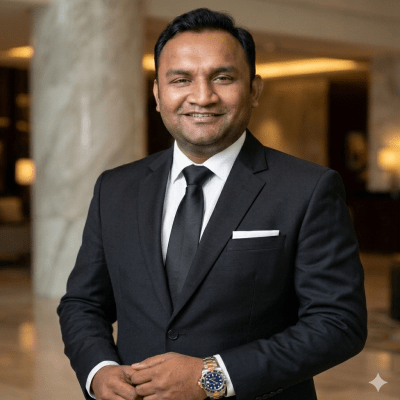
Nikunjj Jhawar is a Chartered Accountant (CA) and Chartered Financial Analyst (CFA) with nearly two decades of experience in the financial services industry. Having worked with global institutions such as HSBC and Credit Suisse in investment-related roles, he brings deep expertise in finance and markets. He is the Founder of mangopeoplenews.com, where he focuses on making complex topics in finance, markets and business accessible and relevant to everyday readers.


