SpaceX’s $60 Billion Cursor Deal Signals A New Ambition: Owning The AI Infrastructure Layer, Not Just Space

When SpaceX completed its acquisition of Cursor maker Anysphere in a deal valued at roughly $60 billion, the immediate reaction focused on the size of the transaction.
But the real significance lies elsewhere.
The world's newest publicly listed technology giant is no longer positioning itself solely as a space and satellite company. With Cursor now joining its ecosystem, SpaceX appears to be building something far broader: a technology platform that combines connectivity, artificial intelligence, software development and global communications infrastructure.
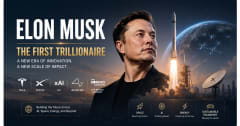
The deal comes only days after SpaceX's blockbuster stock-market debut, which valued the company at nearly $1.8 trillion and briefly pushed founder Elon Musk's net worth beyond the $1 trillion mark. For investors, the acquisition offers an important clue about what SpaceX wants to become in the next decade.
Why Cursor Became One Of The Most Valuable AI Startups
Cursor is not just another AI application.
The company built one of the world's most popular AI coding assistants, helping developers generate code, debug software, understand large codebases and automate programming tasks.
As generative AI transformed software development, Cursor became one of the fastest-growing software products in the industry.
Its adoption spread rapidly among startups, enterprises and independent developers, turning it into one of Silicon Valley's most valuable AI companies in a remarkably short period.
What makes Cursor unique is that it sits directly inside the software-development workflow. Developers use it not occasionally but throughout the coding process itself.
That makes it one of the most strategic AI assets available today.
Why SpaceX Wanted Cursor
At first glance, rockets and coding assistants appear unrelated. But SpaceX is no longer simply a rocket company. Today, the company operates:
Starlink, the world's largest satellite internet network
One of the most sophisticated aerospace software systems ever built
Massive cloud and communications infrastructure
Government and defense technology platforms
Global connectivity services reaching millions of users
Every one of those businesses depends heavily on software. By acquiring Cursor, SpaceX gains access to a platform already embedded within the daily workflow of developers worldwide.
That provides not only productivity benefits internally but also access to one of technology's most influential user communities.
The Grok Connection Could Be The Real Prize
The most interesting part of the transaction may not be Cursor itself. It may be what happens when Cursor is combined with Grok.
Today, most AI ecosystems remain fragmented.
Foundation models are built by one company.
Applications are built by another. Distribution often belongs to someone else. The Cursor acquisition potentially changes that equation. SpaceX now has access to:
Grok's AI capabilities
Cursor's developer platform
X's real-time information network
Starlink's global communications infrastructure
Together, those assets create a far more integrated ecosystem than many competitors possess. Imagine a future where developers build applications using Cursor powered by Grok, distribute products through global internet infrastructure supported by Starlink and leverage real-time information flows originating from X.
That is a significantly larger opportunity than merely selling coding software.
SpaceX Is Becoming Harder To Categorise
Historically, investors could value SpaceX using aerospace metrics, Launch revenues, Satellite deployments, Government contracts and Starlink subscriptions. That framework is becoming increasingly inadequate. The company's business now spans:
Space transportation
Global communications
Satellite internet
AI infrastructure
Developer software
Enterprise technology platforms
The Cursor acquisition expands SpaceX's exposure to one of the fastest-growing segments in technology: AI-assisted software development. As a result, investors may increasingly compare SpaceX not just with aerospace companies but with major technology platforms.
Analysts See A Shift Toward Vertical Integration
One theme emerging across the AI industry is vertical integration. The biggest winners may not be companies with the best individual model or application. Instead, they may be companies controlling multiple layers of the ecosystem simultaneously.
SpaceX already controls connectivity through Starlink.
X contributes distribution and data.
Grok provides AI capabilities.
Cursor adds the developer layer.
Together, these assets create a technology stack that is increasingly difficult to replicate. That strategic logic likely explains why SpaceX was willing to pay such a large price.
What Investors Should Watch Next
The next phase will be integration. Analysts will focus on several questions:
Will Grok become the primary AI engine behind Cursor?
Can Cursor accelerate adoption of SpaceX's broader technology ecosystem?
Will enterprise customers embrace a combined AI and communications platform?
Can SpaceX generate meaningful software revenue alongside aerospace and connectivity businesses? The answers could significantly influence how investors value the company over the next few years.
The Verdict
The $60 billion Cursor acquisition is not really a software deal. It is a statement about where SpaceX sees its future. The company already dominates commercial launches and satellite internet. Now it is moving deeper into artificial intelligence and developer infrastructure.
For years, SpaceX was viewed as the company building the physical infrastructure of the future.
With Cursor joining Grok, X and Starlink, it is increasingly trying to build the digital infrastructure as well. That may ultimately prove even more valuable than rockets.

Nikunjj Jhawar is a Chartered Accountant (CA) and Chartered Financial Analyst (CFA) with nearly two decades of experience in the financial services industry. Having worked with global institutions such as HSBC and Credit Suisse in investment-related roles, he brings deep expertise in finance and markets. He is the Founder of mangopeoplenews.com, where he focuses on making complex topics in finance, markets and business accessible and relevant to everyday readers.