HDFC Bank's Independent Review Clears Board, but the Chairman Who Triggered It Never Showed Up to Be Questioned

When Atanu Chakraborty walked away from his role as part-time chairman and independent director of HDFC Bank on March 18, 2026, he didn't go quietly. His resignation letter cited "certain happenings and practices within the bank" that he said clashed with his "personal values and ethics" — language unusual enough, coming from the chairman of India's largest private sector lender, that it immediately raised questions about what exactly he had witnessed at board level.
Three months and thousands of documents later, the bank's answer has arrived: nothing.
WHAT THE REVIEW ACTUALLY EXAMINED
Within days of Chakraborty's exit, HDFC Bank moved to commission an independent legal review — bringing in Indian law firms Wadia Ghandy and Trilegal alongside the US-based firm Wilson Sonsini Goodrich & Rosati to dig into exactly what he had alleged.
The scope of the exercise was deliberately broad. The terms of reference covered the two years preceding Chakraborty's resignation, with investigators combing through board meeting minutes, recordings of proceedings, agenda documents, and every whistleblower complaint that had been escalated to the board during that window. The central question the review was trying to answer wasn't simply whether something improper had happened at the bank — it was whether Chakraborty himself had formally flagged any of these concerns during his tenure, and if he had, whether the board had actually addressed them.
In a regulatory filing to the BSE and NSE on June 26, the bank disclosed the outcome in unambiguous terms: the law firms found that Chakraborty's statement and its implications "were not substantiated by the record and witness interviews" — a conclusion reached after a three-month exercise that involved reviewing thousands of documents and conducting interviews with independent directors and senior management.
THE MINUTES WENT THROUGH A RIGOROUS PROCESS — AND SHOWED NOTHING
One of the more telling details buried in the filing concerns how thoroughly the board's own paperwork was scrutinised. The review found that minutes of meetings Chakraborty attended had gone through a comprehensive drafting, review, and approval process — and yet, despite that scrutiny, the external firms found no contemporaneous material in those minutes, the underlying agenda documents, or related communications that supported the concerns he had raised.
In plain terms: if Chakraborty had genuinely flagged governance or ethical concerns during board discussions, that record should logically exist somewhere in the paper trail of a heavily-documented institution like HDFC Bank. The review found no trace of it.
THE DUBAI MATTER — AND THE SILENCE AROUND IT
Perhaps the most specific allegation Chakraborty raised after his exit centred on what's now being referred to as the "Dubai matter" — a reference to the alleged mis-selling of AT-1 bonds in Dubai, which he brought up in interviews following his resignation, separate from the formal resignation letter itself.
The external law firms addressed this directly. While Chakraborty referenced the Dubai matter in his post-resignation public statements, the review found no contemporaneous evidence that he had ever raised concerns connecting it to his personal values and ethics, nor any record that he had disagreed with decisions made by the board or its relevant committees regarding that matter — or, for that matter, any other issue those committees had considered during the review period.
The gap between what Chakraborty said publicly after leaving and what the institutional record shows him having said while he was still inside the room is the crux of the bank's position. A serious allegation made after the fact, with no documented trail of having been raised at the time it was supposedly happening, is precisely the kind of discrepancy an independent review is designed to surface.
THE PART THAT MAKES THE OUTCOME HARDER TO CHALLENGE: HE DIDN'T SHOW UP
Perhaps the most consequential procedural detail in the entire episode is this: Chakraborty never sat down with the investigators.
According to the bank's filing, both HDFC Bank and the external law firms repeatedly requested that Chakraborty speak with the investigating team as part of the legal review. That interview never happened. For a review of this magnitude — examining the conduct and credibility of the institution's own former chairman — his absence from the process leaves a fairly obvious asymmetry. The board, independent directors, and senior management all sat for interviews. The one person whose allegations triggered the entire exercise chose not to participate in explaining them.
That detail will likely shape how the findings are received. A review that clears an institution after hearing only one side of a dispute invites scepticism by default — but a review where the complainant was given repeated opportunities to substantiate his own claims and declined each time tells a different story altogether.
WHY THIS MATTERS BEYOND ONE EXECUTIVE'S EXIT
For a systemically important bank — the kind of institution where governance perception directly affects investor confidence, deposit stability, and regulatory scrutiny — an unresolved allegation of this nature sitting in the public domain for three months is not a small distraction. It is the kind of overhang that can quietly weigh on a stock and complicate leadership decisions until it's formally put to rest.
That second point matters considerably here. With the legal review now delivering what amounts to a clean chit to the board, the findings are scheduled to go before the bank's Audit Committee — and from there, likely the full board — at a moment when another significant decision is sitting unresolved: the reappointment of MD & CEO Sashidhar Jagdishan, whose current term runs out in October. Jagdishan was first appointed in 2020, extended once in 2023, and the board had reportedly been waiting on the outcome of this very review before taking up his extension formally. With the cloud now lifted, that decision can move forward.
WHAT REMAINS UNRESOLVED
A legal review commissioned by the entity being investigated, conducted without the complainant's participation, will inevitably draw some scrutiny over its independence — regardless of how rigorous the underlying process actually was. HDFC Bank has been transparent about disclosing both the scope of the review and the fact that Chakraborty declined to engage with it, which at minimum gives shareholders and regulators the full picture needed to judge the findings on their own terms.
What's clear is that the bank has moved decisively to close out a governance question that had been hanging over India's largest private lender for three months. Whether Chakraborty offers any further public response — or continues to stand by his original allegations without engaging the formal process meant to test them — remains the open thread in a story that the bank, for its part, now considers settled.
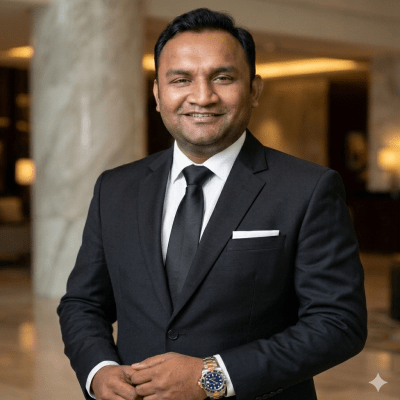
Nikunjj Jhawar is a Chartered Accountant (CA) and Chartered Financial Analyst (CFA) with nearly two decades of experience in the financial services industry. Having worked with global institutions such as HSBC and Credit Suisse in investment-related roles, he brings deep expertise in finance and markets. He is the Founder of mangopeoplenews.com, where he focuses on making complex topics in finance, markets and business accessible and relevant to everyday readers.