Meesho Doesn't Charge Sellers a Single Rupee of Commission — Yet It Makes ₹12,626 Crore a Year. Here's How.
The App That Became Shorthand for Cheap
You've probably heard someone say "Meesho wala lag raha hai" — usually as a gentle dig at someone who bought something inexpensive. Meesho has become India's shorthand for affordable online shopping — the app where you can find a bedsheet for ₹150, a saree for ₹299, or a kitchen organiser that costs less than your morning chai.
What most people don't know is that the company behind those ₹150 bedsheets is nearly a $1.5 billion annual revenue business. It has more than 264 million customers who shop with it every year. It went public in December 2025, raising over ₹5,400 crore through its IPO.
And here is the part that makes every business student scratch their head: Meesho charges zero commission to the sellers who list their products. Not 1%. Not 0.5%. Zero.
So how on earth does it make money?
First, Understand Who Meesho Is Really For
Before explaining the business model, it helps to understand who Meesho is built for — because it's different from Amazon and Flipkart in a very fundamental way.
Amazon and Flipkart were built for people in cities. Fast delivery, branded products, high-quality packaging, detailed product descriptions. The customer they imagined was someone in Mumbai or Bengaluru who wanted their order in 24 hours.
Meesho was built for the rest of India. A shopkeeper in Meerut who wants to sell sarees online. A homemaker in Patna who wants to start a small business. A customer in Bhagalpur who wants affordable clothes but can wait 4-5 days for delivery.
About 80% of Meesho's customers live in smaller cities and towns. Most of the sellers on Meesho are small businesses — many of them one-person operations, family businesses, or micro-entrepreneurs who could never afford to sell on Amazon because of the high commissions and complicated requirements.
The zero commission policy was Meesho's deliberate decision to welcome these sellers without burdening them. But Meesho still needs to earn money to survive and grow. So it found a different way.
Where Meesho Actually Makes Its Money — The Three Main Sources
Instead of taking a cut from every sale, Meesho earns money through services it provides around the sale. Think of it this way: Meesho doesn't charge rent to the shopkeepers, but it charges for the delivery van, the advertising billboard, and the packaging material. Here are the three main ways Meesho earns:
1. Delivery charges (Forward shipping)
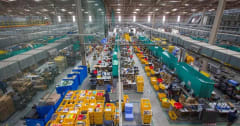
When a customer orders a ₹200 kurta, someone needs to physically pick it up from the seller, pack it, and deliver it to the buyer's home. Meesho handles this through its own logistics platform called Valmo. The seller pays Meesho for this delivery service — based on the weight of the product, how far it needs to travel, and whether the customer is paying cash on delivery or online.
This delivery fee is one of Meesho's most important revenue streams. Every single order generates some delivery income for Meesho.
2. Return charges (Reverse shipping)
In fashion — which is Meesho's biggest category — returns are very common. The kurta didn't fit. The colour looked different on screen. The customer changed her mind.
When a product is returned, the reverse journey also costs money. Meesho charges the seller for bringing the product back. So even returns — which sound like pure losses — actually generate revenue for Meesho.
3. Advertising
Imagine you're a seller on Meesho selling white sneakers. There are 500 other sellers also selling white sneakers. If you want your product to appear at the top of search results when a customer types "white sneakers," you can pay Meesho to promote your listing.
Meesho charges sellers on a cost-per-click basis — meaning every time a potential buyer clicks on your promoted listing, you pay a small amount. Sellers also pay to appear in Meesho's recommendations and category pages.
This advertising business is crucial for Meesho because it gives sellers a reason to keep coming back, even on a zero-commission platform. If you're a serious seller trying to grow your business on Meesho, advertising is how you get noticed.
These three streams — delivery, returns, and advertising — together make up almost all of Meesho's ₹12,614 crore in revenue from its marketplace. The remaining ₹12 crore comes from newer experiments the company is testing.
Valmo — The Delivery Company Inside Meesho That Changes Everything
The most important asset Meesho has built is something most of its customers have never heard of: Valmo.
Valmo is Meesho's own logistics platform. Think of it as a delivery company that Meesho built for itself. Instead of depending entirely on third-party courier companies like Delhivery or Xpressbees, Meesho built Valmo to manage the movement of orders across the country.
Why did they do this? Because when you're selling ₹200 products, delivery cost matters enormously. If delivery costs ₹60 per order and your product is ₹200, you've already spent 30% of the product's value just getting it to the customer. Valmo gives Meesho control over that cost.
Valmo is an asset-light model — meaning Meesho doesn't own trucks or employ thousands of delivery agents directly. Instead, it coordinates thousands of third-party logistics partners through smart technology, routing each order to whichever carrier can deliver it most efficiently and cheaply.
The results have been impressive. Delivery costs per order have fallen significantly as Valmo has scaled. Returns have reduced. The overall speed and reliability of Meesho's deliveries has improved.
Valmo is now one of the largest logistics platforms in India by shipment volume. In the April-June quarter of 2025, Valmo's volume surpassed that of traditional logistics companies — remarkable for a platform that only started a few years ago.
Meesho's CEO Vidit Aatrey has described Valmo as central to the company's future: built without burning huge amounts of money, it now gives Meesho pricing control and predictability that no other ecommerce company of its size enjoys.
The Advertising Business — Why Small Sellers Keep Paying
Here's something interesting about Meesho's advertising business: the sellers paying for ads are the same small merchants Meesho designed its platform to help.
A vegetable seller's son in Surat who started a small Meesho business selling phone covers — he has to compete with 200 other phone cover sellers on the same platform. If he wants his products to be seen, advertising is his best option.
This creates a sustainable cycle. Meesho gives sellers a zero-commission platform to start. Sellers build their initial business. As they grow, they start using advertising to get more visibility. Meesho earns from the advertising. The seller earns more sales. Both benefit.
The advertising business is particularly important because it represents a higher-margin revenue stream compared to delivery. Once the advertising technology is built, serving more sellers through it costs very little incrementally.
However, there's a risk here too. Most Meesho sellers are small merchants with thin margins. They might stop advertising if business is slow, or if they find advertising isn't generating enough extra sales. This makes the advertising income somewhat unpredictable.
The Profitability Challenge — Why This Model Is Still Hard
Despite all this, Meesho still hasn't fully solved its profitability puzzle. In Q4 FY26, it narrowed its net loss to ₹166 crore from ₹1,391 crore a year earlier — a massive improvement, but still a loss.
The reason is that the zero-commission model, while brilliant at attracting sellers and customers, limits how much Meesho can earn from each order. When you're dealing with ₹200 products, even a ₹30 delivery charge doesn't leave much room for profit after paying for operations.
This means Meesho needs enormous scale — millions and millions of orders — to make the business profitable. High volumes spread fixed costs like technology infrastructure, customer service, and warehousing across more orders, making each order cheaper to process.
There's also a transparency problem. Meesho bundles all its revenue — delivery, returns, advertising — into one single line item in its financial reports. Investors and analysts cannot see which part is growing fastest, which has better margins, or whether delivery is actually profitable or just a cost-recovery exercise. This kind of opacity makes it harder to understand the business fully.
What Meesho Is Building Next — AI, Lending, and Voice Shopping
Meesho knows it can't survive on delivery fees and advertising alone forever. So it is experimenting with new revenue streams that could transform the business over the next few years.
Vaani — Shopping by voice in your own language
Meesho launched a product called Vaani — a voice AI assistant that lets you shop using voice commands in Hindi, Tamil, Marathi, and other Indian languages. Instead of typing "yellow cotton kurti size 40" in a search box, you can just say it.
Vaani already has 1.5 million users and has improved the percentage of customers who actually complete a purchase by 22%. This is significant because a large portion of India's potential online shoppers are not comfortable typing in English or navigating complex interfaces. Vaani removes that barrier.
PRISM — The AI engine behind your recommendations
When you open Meesho and see a list of suggested products, most of those suggestions now come from PRISM — Meesho's AI-powered recommendation engine. PRISM currently powers over 75% of all orders on the platform and has improved purchase conversion by about 15%.
In simple terms: Meesho's AI has learned what different kinds of customers like to buy, and shows them more of it. A customer in Lucknow who buys ethnic wear sees more ethnic wear. A customer in Chennai who buys home products sees more home products.
AI catalogue creation for sellers
One of the biggest headaches for small sellers is creating product listings. Writing descriptions, uploading photos, choosing the right category — it's time-consuming for someone who just wants to sell kurtas. Meesho's AI now helps sellers create product listings automatically, cutting the time to get a new product online by 27%.
Small loans for sellers
Through partnerships with lending companies called NBFCs (Non-Banking Financial Companies), Meesho has started helping sellers access small business loans. When a seller gets a loan through Meesho, Meesho earns a share of the interest income. This is a small business today — only ₹12.7 crore in the new initiatives segment — but it represents a huge future opportunity given that most of Meesho's sellers have very limited access to formal credit.
The Big Question — Can Meesho Stay Affordable and Profitable at the Same Time?
This is the most important tension in Meesho's story. The company became India's biggest value ecommerce platform by refusing to charge sellers commissions and keeping prices ultra-low for buyers. But that same decision limits how much money it can make per order.
To become profitable, Meesho needs two things to happen simultaneously: More orders — so that fixed costs are spread more thinly across each transaction. And higher revenue per order — from advertising, from logistics efficiency, from AI tools that sellers pay for.
Both of these are achievable. But they require time, scale, and continued investment. The ₹5,400 crore raised through the IPO gives Meesho the runway to attempt this.
Competitors aren't standing still either. Flipkart, Amazon, Myntra, and AJIO are all investing heavily in the same Tier-2 and Tier-3 customer base that Meesho has built. And all of them are using AI to try to become as relevant to smaller-city customers as Meesho has been.
The Simple Summary
Meesho built India's biggest budget ecommerce platform by doing something counter-intuitive: it gave small sellers a free platform to sell on, with zero commissions. Instead of earning from the transaction itself, it earns from the services around the transaction — delivery, returns handling, and advertising tools.
This model worked brilliantly to attract both sellers and buyers. Meesho now has 264 million customers and generates ₹12,626 crore in annual revenue.
The challenge ahead is converting that revenue into profits — by continuing to improve delivery efficiency through Valmo, growing the advertising business as more sellers upgrade from free to paid promotion, and building new revenue streams through AI tools, voice shopping, and small business loans.
The ₹150 bedsheet is still the hero of the story. But Meesho's real innovation is the invisible infrastructure of delivery routes, AI algorithms, and seller tools that makes that ₹150 bedsheet worth selling in the first place.

Nikunjj Jhawar is a Chartered Accountant (CA) and Chartered Financial Analyst (CFA) with nearly two decades of experience in the financial services industry. Having worked with global institutions such as HSBC and Credit Suisse in investment-related roles, he brings deep expertise in finance and markets. He is the Founder of mangopeoplenews.com, where he focuses on making complex topics in finance, markets and business accessible and relevant to everyday readers.