India's Superbug Slayer: How Wockhardt Just Made History With the First Indian-Discovered Drug to Get FDA Approval — and a ₹17,000 Crore Opportunity Waiting

On May 30, 2026, something happened that Indian pharma has been trying to achieve for 75 years. Wockhardt — a mid-sized Mumbai pharmaceutical company better known for its hospital business and generics than for drug discovery — received FDA approval for an entirely new antibiotic. Not a copy. Not a reformulation. A brand new chemical entity, discovered and developed in India, approved by the world's most stringent drug regulator.
ZAYNICH (WCK 5222) — a combination of cefepime and zidebactam — is the first New Chemical Entity fully developed and commercialised by an Indian pharmaceutical company to receive US FDA approval. Two days before that, India's CDSCO granted its own marketing authorisation for the same drug. And Wockhardt has simultaneously filed for pan-European approval with the EMA, which has deemed the drug eligible for Accelerated Assessment.
Three regulatory approvals — US, India, Europe in process — within 72 hours. For a company that the market had largely written off as a legacy pharma player, the timing is extraordinary.
WHAT ZAYNICH ACTUALLY DOES
The clinical case for Zaynich is not subtle. Phase 3 ENHANCE-1 trial data showed Zaynich achieving the primary composite endpoint in 89% of treated patients with complicated urinary tract infections — compared with 68.4% for meropenem, the current standard of care.
Meropenem is one of the most powerful antibiotics in clinical use. Beating it by 20 percentage points in a head-to-head trial is genuinely remarkable — and it explains why the drug was given Fast Track and QIDP designations by the FDA, both of which signal that regulators considered it a therapeutic priority.
Compassionate use of Zaynich has already saved at least 51 lives in the United States and India as of mid-2025, with some early reports describing a 100% success rate in the most resistant cases. These are patients for whom every other option had failed. Zaynich worked when nothing else could.
The mechanism behind this effectiveness is novel. Zaynich uses a beta-lactam enhancer approach — zidebactam protects cefepime from the bacterial enzymes that would otherwise destroy it, enabling the antibiotic to remain active against multi-drug resistant and extensively drug resistant Gram-negative bacteria. This mechanism bypasses the resistance pathway that has made traditional antibiotics ineffective against superbugs — the category of infections that the WHO has designated as a global health emergency.
THE MARKET OPPORTUNITY: CONSERVATIVE AND OPTIMISTIC ESTIMATES
Wockhardt estimates the total addressable market for Zaynich at approximately $9 billion across the United States, Europe, and India. In India alone, where the company estimates the drug addresses nearly 1.1 million resistant infection cases, the addressable market is approximately ₹17,000 crore. Across the US and Europe, the opportunity is estimated at roughly $7 billion.
The market is more conservative. Vishal Manchanda of Systematix Group estimates the realistic global antibiotic market at around $1.5 billion, with the US accounting for a significant portion. The difference between Wockhardt's $9 billion and the analyst's $1.5 billion reflects a fundamental challenge in antibiotics commercialisation: hospitals and regulators actively resist over-prescribing novel antibiotics to preserve their effectiveness — a stewardship principle that deliberately limits peak market penetration.
Even the conservative estimate, however, represents a transformational revenue opportunity for a company whose current annual revenue runs at approximately ₹3,000–3,200 crore.
THE FINANCIAL PICTURE: TURNING SCIENCE INTO REVENUE
Revenue for recent quarters showed meaningful improvement, with EBITDA growing 58% to ₹160 crore in one quarter, and Q2 FY26 domestic biotech business growth of 42%.
The pipeline behind Zaynich is the detail that most investors are now examining carefully. Wockhardt has a portfolio of six novel antibiotics, all of which have received QIDP designation from the US FDA — three are already approved for clinical use. No other Indian company has built anything remotely comparable in novel antibiotic discovery. This is not a one-drug story. It is a platform.
The stock has delivered approximately 54% returns over the past year, significantly outperforming the Sensex. That re-rating has happened mostly in anticipation of the FDA approval. The question now is whether the commercial execution — pricing, hospital adoption, insurance reimbursement, and US market access — delivers revenue growth that sustains and extends the multiple.
Wockhardt is prioritising commercialisation on its own in the US — though it has not closed the door on partnerships. Going alone in the US hospital antibiotic market is the bolder choice — it preserves all the economics but requires significant sales infrastructure that Wockhardt does not currently have at scale.
THE BIGGER PICTURE
Dr Habil Khorakiwala, Wockhardt's founder-chairman, spent over 27 years building the antibiotic pipeline that produced Zaynich. The FDA approval is the validation that those decades of investment were not wasted. "Here what you are seeing is our success in research, I want you to see success as a business," he said recently — a statement that neatly summarises exactly where Wockhardt stands.
The science is done. The approval is in hand. The ₹17,000 crore India opportunity and the $7 billion global market are real. What remains is the hardest part of any pharmaceutical story: turning a regulatory approval into commercial revenue in a market where antibiotics stewardship deliberately slows adoption.
India has never done this before. Wockhardt is now the first to try.
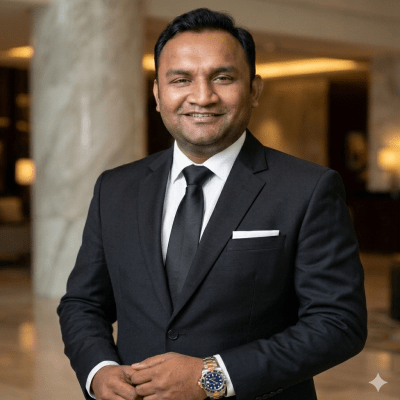
Nikunjj Jhawar is a Chartered Accountant (CA) and Chartered Financial Analyst (CFA) with nearly two decades of experience in the financial services industry. Having worked with global institutions such as HSBC and Credit Suisse in investment-related roles, he brings deep expertise in finance and markets. He is the Founder of mangopeoplenews.com, where he focuses on making complex topics in finance, markets and business accessible and relevant to everyday readers.