
Indian Steelmakers Turn Inward as Europe Tightens Trade Rules and Cheap Chinese Steel Hits Margins
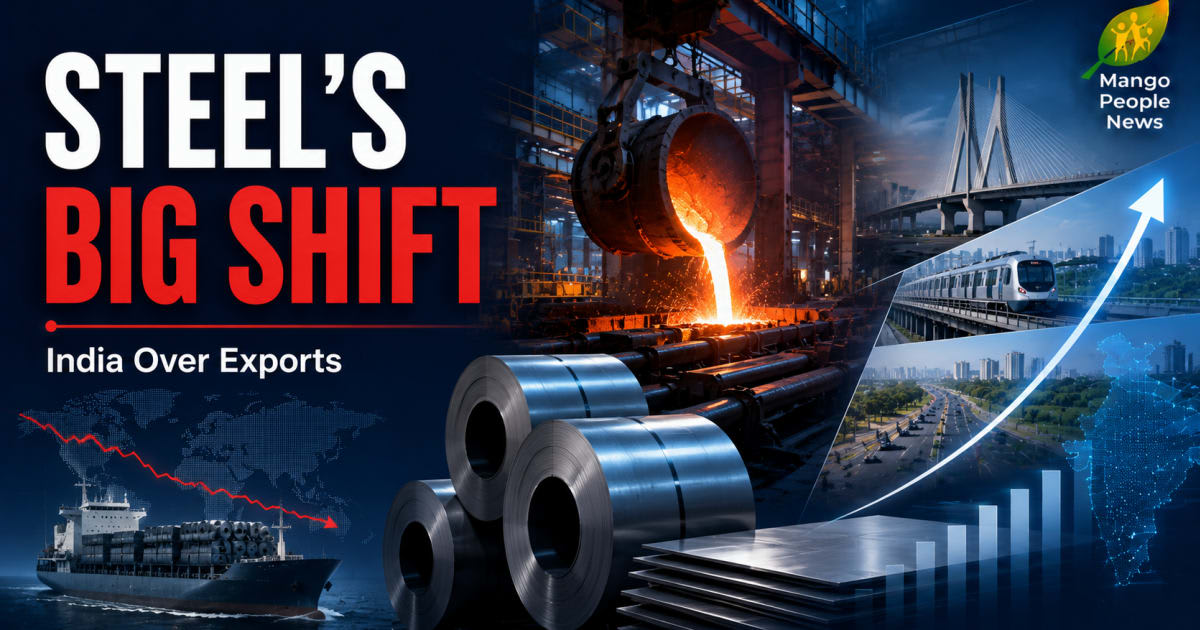
Indian steelmakers are being forced into a difficult pivot. With Europe and the UK tightening import rules, exporters from India are losing access to one of their most important overseas markets, while a flood of cheaper Chinese steel at home is squeezing margins and making the domestic fallback far less profitable than it first appears.
For a sector that has spent years expanding capacity for both export and domestic growth, the shift is a reminder that steel is now being shaped as much by trade policy and geopolitics as by demand cycles. Indian mills are trying to redirect volumes into the local market, but the combination of weak realisations and import competition is compressing earnings across the industry.
Why Europe Matters So Much
Europe is not just another export destination for Indian steelmakers. It has historically been one of the key markets for Indian shipments, especially for flat steel and other value-added products. But that market is now becoming harder to access because of quotas, carbon-related costs and tighter border measures.
Steel executives cited in recent market coverage expect exports to the European Union and Britain to fall sharply this fiscal year, with some estimating a decline of as much as 40 percent. The reason is straightforward: both markets have tightened import rules, and the EU’s carbon-border measures are making Indian steel less competitive.
That creates a strategic problem for Indian producers. When export channels narrow, mills typically try to dump the displaced volumes into the home market. But that only works if domestic demand and prices are strong enough to absorb the extra supply without crushing margins. Right now, they are not.
China’s Cheap Steel Is Changing the Math
The second pressure point is China. Cheap Chinese steel is landing in global markets at prices well below Indian domestic grades, and that is making it harder for Indian mills to hold pricing power even at home.
Executives and analysts say Chinese steel is priced about $52 to $63 per tonne below Indian domestic grades. That discount matters because it limits how much Indian producers can raise prices, and in some cases it forces them to accept lower realisations to stay competitive.
The result is a squeeze from both sides. Export prices are under pressure because of Europe’s trade barriers, and domestic prices are constrained because Chinese steel offers buyers a cheaper alternative. For Indian steelmakers, that is a bad combination: lower sales options and weaker margins at the same time.
Domestic Demand Is Holding Up, But Not Enough
To be fair, the Indian steel market still offers structural support. Infrastructure spending, housing demand, auto production and broader industrial activity continue to underpin consumption. The country remains one of the fastest-growing steel markets in the world, and domestic demand is still expected to expand steadily over the medium term.
But that growth is not translating into a margin windfall just yet. Prices for hot-rolled coil and rebar have softened in recent months, while raw material costs, particularly coking coal, remain volatile. That leaves producers with lower selling prices and not enough pricing power to fully pass on input costs.
Brokerage commentary has also turned more cautious on near-term profits. Analysts note that EBITDA per tonne is likely to remain under pressure as realisations weaken, even if demand growth stays intact. In simple terms, mills may be able to sell more steel, but they are earning less on each tonne.
What This Means For Major Indian Steelmakers
The impact will vary across companies, but the broad trend is the same: more volume is likely to shift to the domestic market, while profitability remains under pressure.
Tata Steel
Tata Steel is among the most exposed to Europe because of its presence in the region. While that gives it strategic scale, it also makes it vulnerable to tighter import quotas and carbon-border rules. The upside is that regional protection could support local pricing in Europe over time, but in the short term the company still faces slower export flows and lower flexibility. �
JSW Steel
JSW Steel has a strong domestic franchise and large capacity expansion plans, which makes it more dependent on Indian demand than some global peers. That is helpful in a rising domestic market, but it also means the company feels price pressure quickly when local imports rise or realisations weaken.
Jindal Steel and Lloyds Metals
These companies are more geared toward domestic demand and infrastructure-linked products. They may be relatively less exposed to Europe’s quota changes, but they still face the same domestic pricing challenge if imported steel remains cheap and local demand does not absorb all the additional supply.
Smaller and Mid-Tier Mills
Smaller producers are often the most vulnerable because they have less pricing power, fewer export channels and weaker balance sheets. If margins stay weak for too long, some of them may delay expansion, trim capex or focus more aggressively on niche domestic products where they can defend pricing better.
Broker Views: Cautious But Not Bearish
Brokerages are not calling the sector broken. In fact, several recent notes still argue that Indian steelmakers remain well placed over the medium term because the domestic market is large, infrastructure spending is sticky and protective trade measures may eventually support local players.
Nomura, for instance, has maintained a positive stance on several Indian steel names, saying that domestic price hikes implemented in late FY26 and early FY27 should be enough to absorb some input-cost pressure. The brokerage also expects sequential improvement in EBITDA per tonne in Q1 FY27 for some producers.
At the same time, other analysts have warned that subdued prices are likely to weigh on profits in the near term. One common theme in the research is that the steel cycle has not collapsed, but earnings recovery remains muted because the industry is caught between trade restrictions, excess global supply and weak price recovery.
The Europe Problem Is Structural, Not Temporary
The bigger concern for Indian exporters is that Europe’s constraints may not be a short-lived policy move. The EU’s carbon-border adjustment mechanism and tighter tariff quotas are part of a broader shift toward protecting domestic producers and penalising higher-emission imports.
That means Indian mills may need to rethink the role of Europe in their business models. Instead of treating it as a large and flexible export outlet, companies may need to view it as a more restricted, higher-cost market that only selectively absorbs premium grades.
Some exporters are already looking for alternative destinations in Africa and the Middle East. But those markets typically do not offer the same scale, pricing stability or quality mix as Europe, which is why the domestic market remains the immediate fallback.
Why Domestic Absorption Is Harder Than It Looks
On paper, India’s steel demand story looks strong enough to absorb more supply. In reality, the market is fragmented across products, regions and end uses. Flat products may fare differently from long products, and premium grades often behave differently from commodity steel.
That means a mill losing export orders cannot simply redirect the same product into any local channel at the same price. It may have to discount, alter its product mix or take a margin hit to clear inventory. The domestic market can absorb volume, but not always at the same profitability.
This is why the current trade environment matters so much. If Europe is less available and Chinese steel remains cheap, Indian mills have fewer options to protect margins. Even a healthy domestic market can become crowded fast when too much export volume comes home.
What To Watch Next
The next few quarters will likely be defined by four variables:
EU and UK import flows: Any further tightening would deepen the export squeeze.
Chinese steel pricing: If Chinese export prices stay low, Indian domestic pricing will remain under pressure.
Domestic demand momentum: Infrastructure, housing and auto demand will decide how much displaced export volume the Indian market can absorb.
Raw material costs: Coking coal and iron ore trends will shape margins as much as finished-steel prices.
If domestic demand stays resilient and prices stabilise, the industry could still post a gradual earnings recovery later in the year. But if imports remain heavy and export markets stay closed, the pressure on margins could persist longer than many producers would like.
Outlook
The Indian steel industry is not in crisis, but it is clearly entering a more complicated phase. Export barriers in Europe and Britain are forcing mills to look inward, while China’s low-priced steel is limiting how far they can lean on the domestic market for relief.
For now, the story is less about runaway growth and more about defence: defending margins, defending volumes and defending pricing power in a market where the old playbook is getting harder to use. The companies that navigate this shift best will be the ones with flexible product mix, efficient costs and the ability to survive a longer period of price pressure.

Nikunjj Jhawar is a Chartered Accountant (CA) and Chartered Financial Analyst (CFA) with nearly two decades of experience in the financial services industry. Having worked with global institutions such as HSBC and Credit Suisse in investment-related roles, he brings deep expertise in finance and markets. He is the Founder of mangopeoplenews.com, where he focuses on making complex topics in finance, markets and business accessible and relevant to everyday readers.


