Can Navi Break The PhonePe–Google Pay Duopoly? Inside India's Next UPI Battle

India's Unified Payments Interface (UPI) has transformed the way millions of people pay for everything from groceries and taxi rides to utility bills and online shopping. What started as a government-backed digital payments initiative has evolved into the world's largest real-time payment ecosystem, processing billions of transactions every month.
For years, however, one aspect of this market has remained remarkably stable. PhonePe and Google Pay have dominated UPI transactions, collectively accounting for the majority of payment volumes. Despite the entry of numerous competitors, very few have managed to make a meaningful dent in their market share.
That dynamic is now beginning to change.
Navi, the fintech venture founded by Flipkart co-founder Sachin Bansal, is emerging as one of the fastest-growing challengers. Rather than relying solely on regulation to weaken the market leaders, Navi is using a combination of financial products, customer incentives and a tightly integrated digital ecosystem to attract new users.
The story is bigger than one company's growth. It signals that the next phase of India's UPI competition may be driven less by payment transactions themselves and more by the broader financial services built around them.
How PhonePe And Google Pay Built Their Lead
The dominance of PhonePe and Google Pay did not happen overnight. Both companies invested heavily in creating simple, reliable and user-friendly payment experiences during UPI's early years. Their growth was supported by:
Simple onboarding.
Fast QR-code payments.
Merchant acceptance.
Cashback campaigns.
Strong mobile applications.
Widespread consumer trust.
As more merchants accepted digital payments, network effects strengthened. Consumers preferred apps accepted everywhere, while merchants prioritized platforms used by the largest number of customers.
This created a self-reinforcing cycle that made it increasingly difficult for newer entrants to compete.
Why NPCI's Market Share Cap Has Had Limited Impact
Recognizing the concentration of the UPI market, the National Payments Corporation of India (NPCI) proposed limiting any single app to 30% market share. The objective was to reduce systemic concentration and encourage healthier competition.
However, implementation has been gradual, and the competitive landscape has evolved in other ways. Instead of waiting for regulation to redistribute market share, newer fintech companies have focused on creating differentiated customer experiences.
Rather than convincing users to switch payment apps purely for UPI transfers, they are building broader financial ecosystems that encourage customers to use multiple services within a single application.
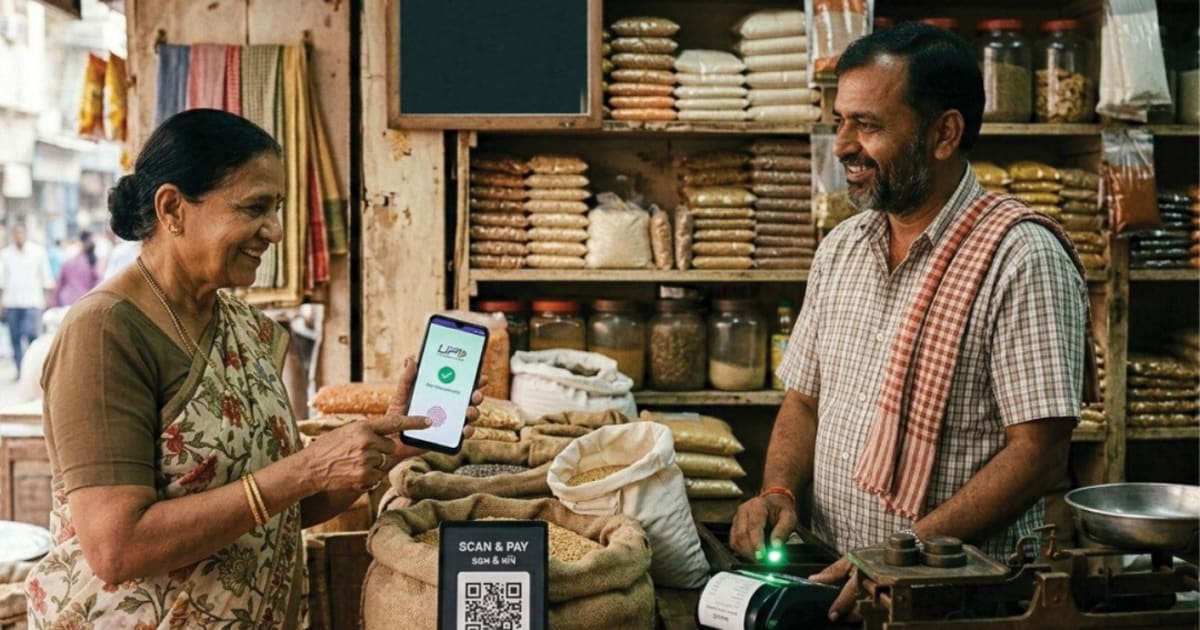
Navi Is Playing A Different Game
Unlike companies that focus primarily on digital payments, Navi has positioned itself as a comprehensive financial services platform. Its offerings extend well beyond UPI payments and include Personal loans, Home loans, Health insurance, Mutual funds, Digital banking services and Credit products.
UPI acts as an entry point into this larger ecosystem. Once customers begin using the app for payments, they are introduced to additional financial products that can deepen engagement and improve long-term customer value.
This integrated strategy mirrors the broader evolution of fintech globally, where payments increasingly serve as the gateway to more profitable financial services.
Embedded Finance Is Changing The Industry
The next stage of digital payments is increasingly centered on embedded finance. Rather than forcing users to visit multiple institutions for different financial needs, payment platforms aim to provide an integrated ecosystem where customers can Make payments, Borrow money, Buy insurance, Invest in mutual funds, Manage savings, Pay bills and Track expenses.
This convenience strengthens customer loyalty while increasing revenue opportunities for fintech companies. As a result, competition is shifting from transaction volume to customer lifetime value.
Competition Benefits Consumers
Growing competition within the UPI ecosystem ultimately benefits users. Consumers gain access to Better user experiences, Faster innovation, Improved security, More financial products, Lower borrowing costs, Better rewards and Personalized services.
Merchants also benefit from improved payment solutions, financing options and business management tools. Rather than creating a winner-takes-all market, India's digital payments ecosystem is gradually evolving into a broader financial marketplace.
The Bottom Line
India's UPI revolution has already transformed the country's payments landscape, but the next chapter is likely to be about much more than digital transactions.
Companies such as Navi are demonstrating that the future of fintech lies in building integrated financial ecosystems where payments serve as the foundation for lending, insurance, investments and wealth management.
PhonePe and Google Pay remain formidable market leaders with enormous scale and consumer trust. However, increasing competition from fintech platforms focused on embedded finance suggests that future market leadership will depend not only on processing the highest number of payments but also on creating the most valuable long-term customer relationships.
For India's fintech sector, the battle is no longer simply about who owns the payment interface. It is about who becomes the primary financial platform for hundreds of millions of digital consumers.

Nikunjj Jhawar is a Chartered Accountant (CA) and Chartered Financial Analyst (CFA) with nearly two decades of experience in the financial services industry. Having worked with global institutions such as HSBC and Credit Suisse in investment-related roles, he brings deep expertise in finance and markets. He is the Founder of mangopeoplenews.com, where he focuses on making complex topics in finance, markets and business accessible and relevant to everyday readers.