
The Institutional Reset: Inside UTI AMC’s Turnaround Strategy and Vetri Subramaniam’s Blueprint for Growth

A major structural transition is unfolding at one of India’s oldest and most historically significant asset management hubs. UTI Asset Management Company (UTI AMC), an institution that traces its roots back to the creation of the country's mutual fund industry, is entering a new era of leadership. The fund house has officially appointed its seasoned Chief Investment Officer, Vetri Subramaniam, as its new Managing Director and Chief Executive Officer, effective February 1, 2026. Succeeding Imtaiyazur Rahman, Subramaniam steps into the role during an aggressive industry-wide expansion, with a clear mandate: modernizing the firm's core investment frameworks, accelerating retail market share penetration, and engineering a technology-driven turnaround to narrow the gap with aggressive private-sector rivals.
1. The Leadership Blueprint: Transitioning from Technical Moat to Scale
Subramaniam’s transition to the chief executive position marks a shift from tactical fund management to broad corporate scale. A veteran of the Indian capital markets with more than three decades of experience spanning economic liberalization cycles, he has driven the group’s core equity frameworks since joining the firm in 2017 and taking over as group CIO in 2021.
Unlike an outside corporate administrator, an internal elevation brings deep familiarity with the firm's legacy systems:
Process Over Personality: Under his tenure as CIO, the AMC systematically reduced its reliance on individual "star" fund managers. Instead, it built a strict, fundamentals-based quantitative and qualitative research engine.
Fostering Corporate continuity: The long transition phase—with the outgoing CEO remaining as a strategic advisor—is designed to maintain stability across large institutional clients, independent financial advisors (IFAs), and capital market regulators.
From Stock Picking to Team Alignment: Subramaniam has noted that leading an institutional asset manager requires treating corporate strategy like a "team sport," shifting the operational focus toward workforce empowerment and scaling process execution across multiple asset classes.

2. The Turnaround Challenge: Reclaiming Market Share in a ₹60 Lakh-Crore Industry
The core corporate challenge facing the new leadership is structural market position. While the Indian mutual fund industry has experienced massive growth—driven by retail Systematic Investment Plan (SIP) inflows and rapid financialization—UTI AMC has historically conceded market share to banking-backed giants like SBI Mutual Fund, ICICI Prudential, and HDFC Mutual Fund.
Despite slip-ups in absolute rankings, the fund house retains a powerful geographic footprint that forms the bedrock of its turnaround plan:
The Regional Network Advantage: The firm commands a distribution network that covers 90% of India's districts, giving it a strong physical connection to tier-2 and tier-3 locations that many digital-only platforms struggle to engage effectively.
The Diverse Product Moat: The asset manager maintains a stable product line across 65 operational schemes—including flagship offerings like the UTI Nifty 50 Index Fund and specialized high-performing variants like the Nifty200 Momentum 30 Index Fund—managing an aggregate asset pool of ₹3.93 lakh crore.
3. The Digital Leap: Deploying AI and Machine Learning in Fund Operations
The secondary pillar of the recovery roadmap relies on data modernization. The company is actively integrating machine learning tools and predictive analytics into its traditional investment frameworks to lower operating costs and enhance performance tracking. The technological overhaul targets three key operational areas:
Advanced Equity Research: Using natural language processing to filter corporate filings, tracking global supply chain shifts, and processing big data to augment standard equity research pipelines.
Predictive Risk Architecture: Building machine-learning compliance layers that instantly scan portfolio weightings against internal risk thresholds, speeding up execution during volatile market corrections.
Customized Investor Outreach: Deploying automated digital platforms to offer custom insights and seamless transaction pipelines to retail investors outside metropolitan hubs, lowering acquisition costs per user.
4. Financial Performance: Steady Balance Sheet Strength
Financially, the turnaround plan starts from a position of relative corporate stability. The asset manager's revenue model benefits from its diversified product mix across active equities, fixed-income portfolios, passive index strategies, and alternative investment funds (AIFs).
By maintaining low administrative cost structures and leveraging its high operating conversion, the AMC remains highly profitable at a corporate level, allowing it to easily self-fund its current digital and distribution expansion plans.
Conclusion: Balancing Historic Trust with Technical Innovation
UTI AMC’s strategic transition is a clear case of an institutional giant using its structural legacy to capture a changing market. The company’s turnaround plan centers on turning its historical brand equity into a scalable asset through process discipline and technological integration.
For retail and institutional asset holders alike, the elevation of an investment professional to the chief executive role brings significant clarity to the company's direction. The long-term test for the business will be converting its deep tier-2 physical network into high-yielding equity flows, while systematically using machine-learning tools to cut down portfolio errors. If Subramaniam’s team can successfully merge the fund house's historical legacy of trust with a modern, data-driven approach, UTI AMC will be well-positioned to regain its edge and secure a major stake in the long-term wealth compounding story of the Indian consumer.
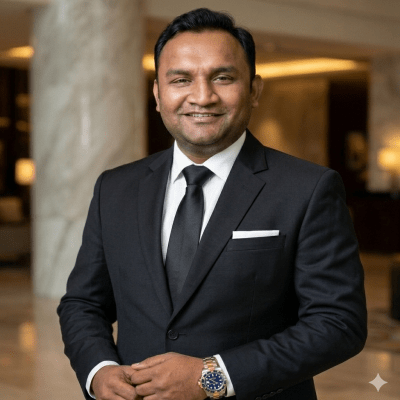
Nikunjj Jhawar is a Chartered Accountant (CA) and Chartered Financial Analyst (CFA) with nearly two decades of experience in the financial services industry. Having worked with global institutions such as HSBC and Credit Suisse in investment-related roles, he brings deep expertise in finance and markets. He is the Founder of mangopeoplenews.com, where he focuses on making complex topics in finance, markets and business accessible and relevant to everyday readers.
