Mukesh Ambani's 5S Blueprint: The Leadership Framework Powering Reliance's Next Generation

As Reliance Industries prepares for one of the most closely watched leadership transitions in Indian corporate history, Chairman Mukesh Ambani is focusing on a challenge that extends beyond succession planning.
The question is not simply who will lead Reliance in the future.
The bigger question is whether the group can build a leadership pipeline capable of supporting the next generation of management while sustaining growth across a sprawling business empire spanning energy, telecom, retail, digital services and new-age technologies.
To address that challenge, Ambani has introduced what insiders describe as a "5S" leadership framework while simultaneously nurturing a pool of nearly 500 future leaders across the Reliance ecosystem.
The initiative highlights how Reliance is attempting to institutionalise leadership rather than rely solely on family-led decision-making.
Reliance's Succession Story Is Entering A New Phase
Over the past few years, Reliance has steadily increased the operational responsibilities of Ambani's children.
Akash Ambani
Has taken a larger role in shaping the future of Reliance Jio.
Isha Ambani
Has emerged as a key figure within the retail and consumer businesses.
Anant Ambani
Is increasingly associated with the group's energy transition and sustainability initiatives.
While the family transition attracts headlines, Reliance's leadership development strategy suggests that the company understands a crucial reality: No conglomerate with businesses of Reliance's scale can depend solely on family leadership.
A strong institutional management layer is equally important.
What Is The 5S Leadership Framework?
The "5S" philosophy is designed to create a common leadership culture across Reliance's diverse businesses. Although the framework is intended as an internal management philosophy, its broader objective is clear: To develop leaders who can think beyond individual business units and align themselves with the group's long-term vision.
The initiative focuses on building:
- Strategic thinking
- Speed of execution
- Simplicity in decision-making
- Strong organisational culture
- Sustainable growth orientation
Together, these principles are intended to create a leadership model that can operate effectively across industries ranging from petrochemicals to artificial intelligence.
Why Reliance Needs Hundreds Of Leaders
Reliance today is dramatically different from the company it was two decades ago. The conglomerate now operates across:
- Oil-to-chemicals
- Telecom
- Retail
- Digital platforms
- Media
- Renewable energy
- Data centres
- Artificial intelligence
- Consumer brands
Each business requires specialised leadership teams capable of making decisions independently while remaining aligned with group objectives.
That explains why Reliance is reportedly grooming around 500 high-potential executives.
The objective is not merely succession. It is scale.
As the organisation expands, leadership capacity must expand alongside it.
The Institutionalisation Of Reliance
Historically, many Indian business groups remained heavily promoter-centric. Decision-making was often concentrated within a small leadership circle.
Reliance appears to be moving toward a more institutional structure similar to leading global corporations. This evolution is important because investors increasingly evaluate businesses based on management depth rather than promoter strength alone.
A broader leadership pool can provide:
- Better continuity
- Stronger governance
- Faster execution
- Improved accountability
- Greater resilience during transitions
These factors become increasingly valuable as companies grow larger and more complex.
A Critical Decade For Reliance
The timing of the initiative is significant. Reliance is entering what could become one of the most transformative periods in its history. The company is simultaneously pursuing opportunities in:
Digital Infrastructure
Expansion of Jio's telecom and digital ecosystem.
Retail Expansion
Strengthening Reliance Retail's position across online and offline commerce.
Green Energy
Massive investments in solar manufacturing, batteries, green hydrogen and renewable energy.
Artificial Intelligence
Building data infrastructure and AI capabilities to support future growth.
Managing multiple large-scale transformations requires a deep bench of capable leaders.
What Investors Should Take Away
Investors often focus on revenue growth, profits and capital expenditure announcements. However, leadership quality can be equally important.
Many global corporations have struggled during generational transitions because they failed to develop management talent beyond the founding family.
Reliance's latest initiative suggests the company is trying to avoid that risk.
The development of hundreds of leaders indicates management is thinking beyond immediate succession and focusing on long-term organisational sustainability.
How Reliance Compares Globally
Large global conglomerates such as:
- Amazon
- Alphabet
- Samsung
- Toyota
Invest heavily in leadership development programmes designed to create future CEOs, business heads and operational leaders.
Reliance's approach appears increasingly aligned with these global practices. The emphasis is shifting from succession planning to leadership institution-building.
The Verdict
Mukesh Ambani's 5S leadership framework is about far more than preparing the next generation of the Ambani family. It is part of a broader effort to build a management structure capable of supporting one of India's largest and most ambitious business groups.
As Reliance expands into digital services, retail, green energy and artificial intelligence, leadership depth will become as important as capital allocation. By grooming hundreds of future leaders while empowering the next generation of family leadership, Reliance is attempting to create a model where growth does not depend on any single individual.
For investors, that may prove to be one of the company's most important long-term investments.
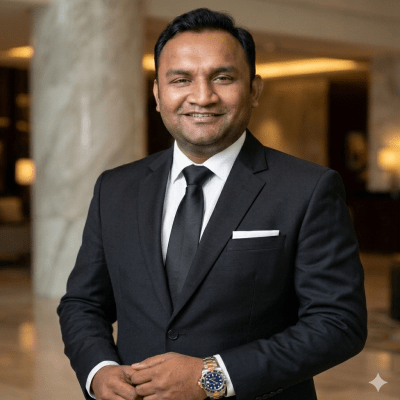
Nikunjj Jhawar is a Chartered Accountant (CA) and Chartered Financial Analyst (CFA) with nearly two decades of experience in the financial services industry. Having worked with global institutions such as HSBC and Credit Suisse in investment-related roles, he brings deep expertise in finance and markets. He is the Founder of mangopeoplenews.com, where he focuses on making complex topics in finance, markets and business accessible and relevant to everyday readers.