Hallyu Goes Commercial: How K-Dramas Turned Into a Billion-Dollar Opening for Indian Startups

A decade ago, asking an Indian shopper about Korean skincare or Samyang noodles would likely have drawn a blank stare. Today, ask the same question to anyone under 25, and you're likely to get a brand recommendation, a favourite drama reference, and possibly a K-pop playlist suggestion. Somewhere between binge-watching K-dramas and discovering K-pop on Spotify, an entire generation of Indian consumers built an appetite that startups and legacy companies alike are now racing to feed.
What began purely as entertainment consumption has quietly evolved into one of the most commercially significant consumer trends in India today — and according to a recent Jefferies report, the numbers behind it are large enough that no major consumer company can afford to ignore them anymore.
BEAUTY GOT THERE FIRST — AND IS GROWING FASTEST
If there's one category that proves the Korean wave is genuine commerce rather than passing fascination, it's beauty. India's overall beauty and personal care market, valued at roughly $24 billion in 2024, is projected to nearly double to $45 billion by 2030. Within that expanding pie, K-beauty currently sits at just $400 million — barely 2% of the total market — but it's growing at a 26% compound annual rate, on track to balloon to nearly $1.5 billion by 2030. That's a category growing several multiples faster than the broader market it sits within.
Nykaa moved early and aggressively here, building out its Korean brand portfolio while simultaneously turning the category into a cultural event — hosting a dedicated K-Beauty Festival, its Nykaaland 3.0 showcase, and an Amorepacific Day designed purely to spotlight Korean skincare. The company hasn't broken out exactly how much Korean beauty contributes to its overall GMV, but the Jefferies report notes that GMV from Korean brands on the platform grew 58% year-on-year — a clear signal of where incremental beauty demand is concentrated.
Reliance Retail's Tira has run a near-identical playbook, bringing in exclusive Korean labels like TIRTIR, Mixsoon, and Skin1004, paired with its own beauty festivals built around the trend. The momentum isn't confined to dedicated beauty platforms either — Amazon's K-beauty sales are climbing at roughly 75% year-on-year, while Myntra has logged nearly 200% annual growth in the category, numbers that suggest this demand exists well beyond any single platform's marketing push.
Homegrown D2C brands have noticed too. Pilgrim has rolled out a dedicated Korean skincare line spanning around 40 products, while Quench Botanics has built its entire portfolio around Korean formulations from the ground up. Even services have adapted — Lakmé now offers Korean-inspired beauty treatments, and on-demand platforms Urban Company and Yes Madam have both added Korean skincare services to their salon-at-home menus.
FOOD IS THE NEXT FRONTIER, AND QUICK COMMERCE IS LEADING IT
If beauty proved the trend has staying power, food is where it's currently scaling fastest.
Quick commerce platforms are reporting rising demand specifically for authentic Korean brands like Samyang and Nongshim — not just Korean-flavoured alternatives made by Indian manufacturers. Zepto has gone as far as carving out a dedicated Korean food section on its app, and company sources note that genuinely authentic Korean brands are consistently outperforming locally-made products that simply borrow the flavour profile.
That consumer pull has been strong enough to drag India's largest FMCG players into the category. Nestlé, ITC, Hindustan Unilever, and Tata Consumer have all introduced Korea-inspired product lines, betting that the demand signal from quick commerce platforms reflects a broader shift rather than a niche preference.
Restaurant chains are seeing the same pattern play out at scale. McDonald's, Burger King, KFC, Domino's, and Wendy's have all launched Korean-inspired menu items over the past year — and according to company executives cited in the Jefferies report, these launches have driven measurably higher footfall, stronger app engagement, and more transactions per customer. That kind of measurable commercial lift is exactly what's pushing more brands to keep experimenting with Korean flavours rather than treating it as a one-off marketing stunt.
FASHION IS CATCHING UP TO BEAUTY AND FOOD
Fashion marketplaces are the latest category to lean into the trend. Myntra, Nykaa Fashion, and Ajio have all expanded their Korean-inspired clothing collections, while Amazon now lists more than 4,000 Korean fashion products on its platform — a scale that suggests this has moved well past a curated, niche assortment.
Even categories that seem far removed from fashion trends have found a way in. Eyewear startup Lenskart launched a K-pop-inspired eyewear collection, backed by an AI-powered virtual band built specifically to market the line — a sign of just how far companies are willing to go to plug into this cultural moment.
THE REAL ENGINE: ENTERTAINMENT, NOT MARKETING
None of this commercial activity would exist without the entertainment wave that preceded it. Streaming platforms including Netflix, Prime Video, and MX Player have significantly expanded their Korean drama libraries in response to surging viewership, and the appetite for Korean content has translated directly into music consumption as well. Spotify data cited in the Jefferies report shows K-pop listenership in India has grown 300% over the past five years, with the country now home to more than 15 million active K-pop fans.
That's the part worth sitting with: every commercial opportunity described above — the beauty festivals, the noodle aisles, the fashion collections — exists downstream of a content trend that nobody specifically engineered for commerce. It simply happened, organically, as Indian audiences discovered Korean storytelling and music on their own terms, and the consumer brands followed the demand rather than creating it.
WHY THIS LOOKS LIKE A SHIFT, NOT A FAD
What separates this from countless other short-lived consumer trends is the breadth of who's now betting on it. It's not just niche D2C startups chasing a viral moment — it's Reliance Retail, Nestlé, ITC, Hindustan Unilever, and four of the world's largest quick-service restaurant chains, all independently arriving at the same conclusion that Korean products and flavours deserve permanent shelf space rather than a seasonal campaign.
For startups specifically, the Korean wave has stopped being a cultural curiosity and become a genuine line item in growth strategy. Whether it's a beauty brand building an entire skincare range around Korean formulations, a quick commerce platform dedicating app real estate to Korean snacks, or a fashion marketplace expanding K-inspired collections, the common thread is that these companies are treating this as a structural shift in what younger Indian consumers want — not a trend that fades once the next drama series stops trending.
As Gen Z and Gen Alpha continue to set the pace for India's consumption patterns, Korea's cultural footprint looks set to keep expanding its commercial one alongside it — and the startups that moved early on beauty are now watching food and fashion follow the exact same trajectory.
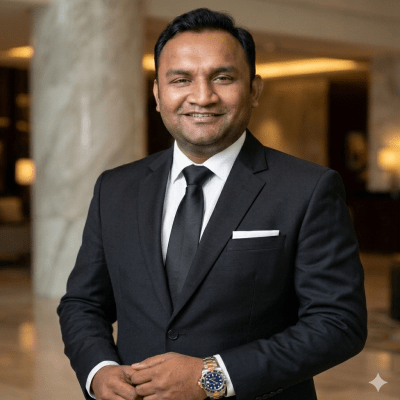
Nikunjj Jhawar is a Chartered Accountant (CA) and Chartered Financial Analyst (CFA) with nearly two decades of experience in the financial services industry. Having worked with global institutions such as HSBC and Credit Suisse in investment-related roles, he brings deep expertise in finance and markets. He is the Founder of mangopeoplenews.com, where he focuses on making complex topics in finance, markets and business accessible and relevant to everyday readers.