

After Zomato, Deepinder Goyal Is Betting on a Brain Sensor — and Deliberately Not Doing the Math

Deepinder Goyal spent eighteen years building Zomato from a menu-scanning side project into India's most valuable new-age tech company. He stepped down as CEO in January 2026, handing the reins to Albinder Dhindsa — the man who built Blinkit into the quick commerce juggernaut that now drives most of Eternal's growth. And then, freed from the constraints of running a listed company, Goyal did something that nobody in Indian tech had quite anticipated.
He put a device on his forehead and started tracking his brain.
WHAT TEMPLE ACTUALLY IS
Goyal raised $54 million for Temple — a brain-monitoring wearable startup — in a friends-and-family round at a post-money valuation of approximately $190 million, led personally by Goyal and followed by Steadview Capital. More than 30 employees also participated at the same valuation.
Temple is a research-driven wearable device worn on the forehead, designed to measure cerebral blood flow in real time. The project originally emerged from Goyal's exploration of the "Gravity Ageing Hypothesis" — a theory suggesting that gravity may contribute to the human ageing process by affecting blood circulation to the brain over decades.
The device's placement on the temple — not the wrist or finger like most wearables — was initially accidental. "For various reasons of convenience, we ended up putting it on the temple — primarily because it was a flat surface," Goyal said. Researchers working on the project later discovered that the temple provided unusually rich physiological data compared to more traditional measurement points. "At that point we decided to leave the gravity ageing hypothesis on the side and focus on the device," he explained.
THE DELIBERATE DECISION NOT TO DO THE MATH
What makes Goyal's approach to Temple genuinely unusual — and unusually honest — is how he has chosen to frame the investment publicly. He said he is not currently evaluating Temple through traditional financial modelling. The rationale is deliberate: this is a high-risk scientific exploration, and forcing a P&L lens on early-stage research would distort the decisions being made.
This is the kind of intellectual freedom that stepping away from a listed company's quarterly reporting cycle actually enables. In October 2025, Goyal also committed $25 million of his own capital to Continue Research — a separate longevity initiative exploring ways to extend human lifespan. Between Temple and Continue Research, he has committed roughly $79 million of his personal capital to health and longevity science in under a year. He has also previously backed Ultrahuman, the wearable maker that competes with Oura's smart ring.
The emerging pattern is not a distracted founder dabbling in random ventures. It is a coherent thesis: that the next generation of meaningful technology will not be built in food delivery or quick commerce, but at the intersection of wearables, neuroscience, and human longevity.
Whether Temple ultimately generates a financial return is beside the point — at least for now. India's most successful food-tech founder has stepped off the quarterly earnings treadmill and started asking a different kind of question entirely. What he finds on the other side of that forehead sensor may matter considerably more than whether the unit economics work in Year One.
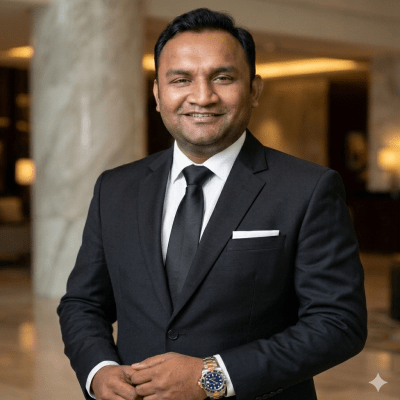
Nikunjj Jhawar is a Chartered Accountant (CA) and Chartered Financial Analyst (CFA) with nearly two decades of experience in the financial services industry. Having worked with global institutions such as HSBC and Credit Suisse in investment-related roles, he brings deep expertise in finance and markets. He is the Founder of mangopeoplenews.com, where he focuses on making complex topics in finance, markets and business accessible and relevant to everyday readers.


