Aditya Birla's Indriya Targets Top-3 Spot In Jewellery Retail, Eyes 200-250 Stores Across India
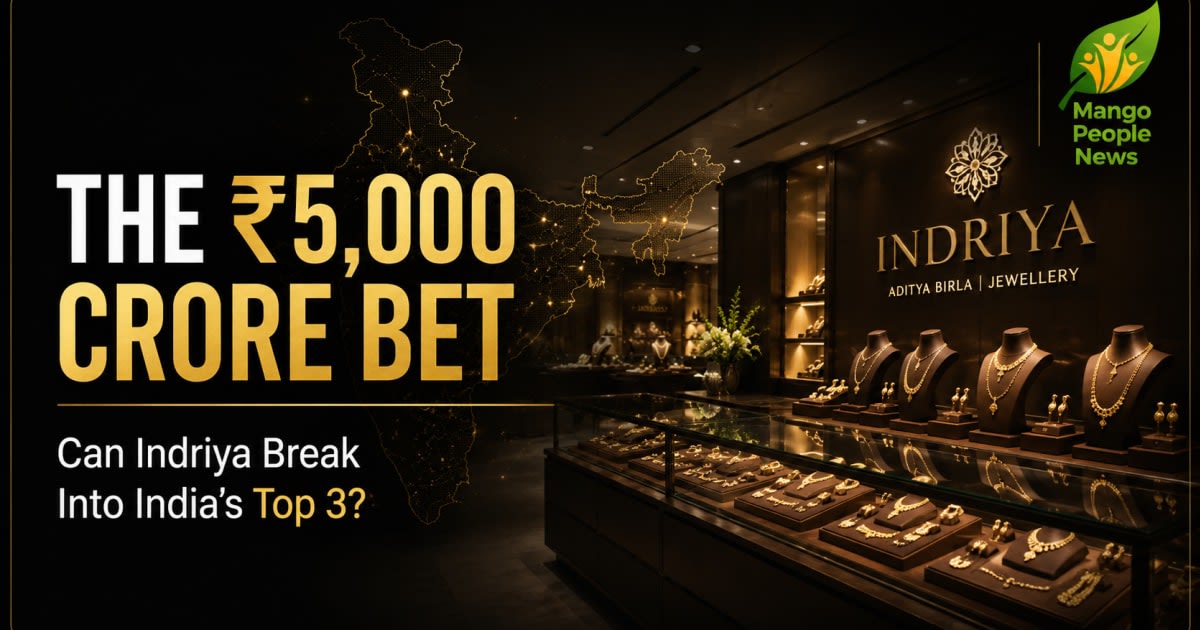
Less than two years after launching its jewellery business, the Aditya Birla Group is setting ambitious goals for its newest consumer brand.
Indriya, the conglomerate's organised jewellery retail venture, wants to establish itself among India's top three jewellery brands. To support that ambition, the company plans to expand its retail network from 81 stores today to 200–250 outlets, while focusing on customer experience, curated product assortments and brand building rather than chasing store numbers alone.
"We have a clear North Star—to become one of India's top three jewellery brands," said Sandeep Kohli, Chief Executive Officer of Indriya-Aditya Birla Jewellery. However, the company has not specified a timeline for achieving either the top-three ranking or its targeted store network.
Fastest-Growing Jewellery Retail Network
Indriya currently operates 81 stores across 40 cities, covering metro, Tier-I, Tier-II and other non-metro markets. According to Kohli, the brand has achieved this scale in less than two years, making it one of the country's fastest-growing organised jewellery retailers.
Instead of viewing expansion purely as a numbers game, the company says each outlet must offer the right merchandise mix, experienced staff and a premium customer experience.
"We don't believe growth is driven only by adding more stores. Having the right store, the right assortment and the right people is equally important," Kohli indicated.
₹5,000 Crore Bet On Jewellery
The Aditya Birla Group entered the jewellery business in 2023, announcing an investment commitment of ₹5,000 crore to build the business.
The Indriya brand was launched in 2024, marking the group's formal entry into one of India's largest consumer categories.
Kohli said the company is still deploying the initial ₹5,000 crore investment, suggesting that the expansion strategy remains in its early stages.
Old Gold Exchange Becoming A Major Sales Driver
One trend that has gathered momentum at Indriya is jewellery exchange. Customers exchanging old gold jewellery are contributing an increasing share of business, with 45% to 55% of total jewellery sales now coming through old-gold exchange transactions, according to the company.
The trend reflects consumers' preference for upgrading existing jewellery rather than making entirely fresh purchases, particularly in an environment of elevated gold prices.
Diamond Jewellery Is Catching Up
While gold remains the largest category, Indriya says demand for diamond jewellery is steadily strengthening. Kohli noted that the company's share of diamond-studded jewellery sales is already comparable with that of leading organised jewellers.
Most of Indriya's studded jewellery is crafted in 18-carat gold, aligning with industry preferences. Across the organised jewellery industry, more than 25% of sales for leading brands typically come from diamond or studded jewellery—a benchmark Indriya says it is approaching.
Lab-Grown Diamonds Are Not A Threat—Yet
Asked whether laboratory-grown diamonds could reduce demand for natural diamonds, Kohli struck a balanced note. He pointed out that diamonds account for less than 10% of India's overall jewellery market, leaving ample room for both natural and lab-grown products.
At the same time, he argued that natural diamonds continue to command emotional and aspirational value because of their rarity. "Natural diamonds come from Mother Earth and exist in limited quantities. That uniqueness and emotional appeal will continue to attract many buyers," Kohli said.
Competition Is Intensifying
Indriya's expansion comes as India's organised jewellery market becomes increasingly competitive.
Established players such as Tanishq, Kalyan Jewellers, Malabar Gold & Diamonds and Joyalukkas continue to expand aggressively, while consumers increasingly favour branded retailers offering certified products, transparent pricing and exchange programmes.
For Indriya, the challenge will be to convert its rapid rollout into sustainable market share while differentiating itself on experience and assortment rather than footprint alone.
The Bottom Line
With 81 stores already operational, a target of 200–250 outlets, and a ₹5,000 crore investment backing its expansion, Indriya is positioning itself as a serious challenger in India's organised jewellery industry.
Whether the brand ultimately joins the country's top three jewellery retailers will depend not only on how quickly it expands, but also on its ability to build lasting customer trust, strengthen its product mix and deliver a consistent retail experience across India.

Nikunjj Jhawar is a Chartered Accountant (CA) and Chartered Financial Analyst (CFA) with nearly two decades of experience in the financial services industry. Having worked with global institutions such as HSBC and Credit Suisse in investment-related roles, he brings deep expertise in finance and markets. He is the Founder of mangopeoplenews.com, where he focuses on making complex topics in finance, markets and business accessible and relevant to everyday readers.